Rural Kenyan Nurse Vacancies Stay Unfilled While Urban Private Clinics Hire Retired Staff
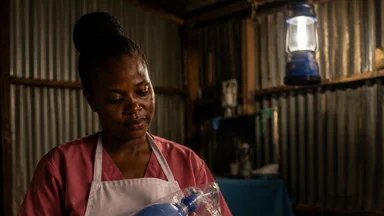
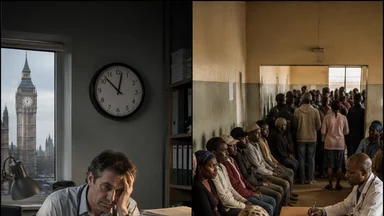
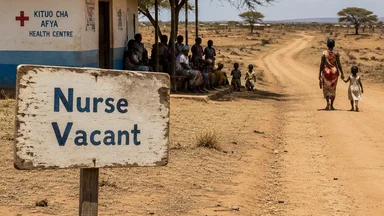
In rural Kenya, a mother in labour may walk hours to a health centre only to find no nurse on duty. The facility has a vacancy sign that has been up for years. Across the country, in Nairobi, a private hospital hires a retired nurse to cover a shift, paying her three times what she earned in the public system. These two scenes capture a single crisis: Kenya's nursing workforce is unevenly distributed, and the mechanisms meant to correct the imbalance have largely failed.
The Rural Vacancy Trap: Why Nurses Leave and Never Return
Kenya trains thousands of nurses every year, yet rural public facilities remain chronically understaffed. In counties such as Turkana, Mandera, and Marsabit, vacancy rates for nursing positions exceed 50%. According to the Kenya Health Workforce Report (2023), the national nurse-to-population ratio is about 1.2 per 1,000, far below the WHO threshold of 2.5. But that average hides deep disparities: in Nairobi, the ratio is roughly 3 per 1,000; in rural counties, it can drop below 0.5.
The reasons are well documented. Rural postings offer lower salaries—around 40,000–60,000 KES per month for a starting nurse, compared to 120,000–180,000 KES in urban private facilities. Hardship allowances, promised by the government, are often delayed by months. Housing is scarce, schools for children are poor, and professional isolation is common. A nurse in a remote dispensary may be the only trained health worker for 10,000 people, with no supervision or continuing education.
Training pipelines do little to address this. Most nursing colleges are in cities, and students from rural areas often stay urban after graduation. The government's bonding scheme, which requires graduates to serve in rural areas, is poorly enforced. A 2021 audit found that fewer than 30% of bonded nurses completed their rural service. Others pay a penalty and leave, or simply never report.
The result is a system where patients bear the cost. A study in the East African Medical Journal found that women in rural areas travel an average of 12 kilometres to reach a facility with a nurse, and often wait hours. For emergencies like obstructed labour, that delay can be fatal. A nurse in Mandera recounted a case where a woman arrived in labour but the nurse was the only staff member on duty; she had to manage the delivery while also attending to a child with malaria, leading to a near-miss for the mother. Such stories are common in rural facilities, where the workload is relentless and the support minimal.
The vacancy trap is not just about numbers; it is about morale. Nurses who stay in rural posts often report burnout, with some working 24-hour shifts regularly. A 2022 survey by the Kenya National Union of Nurses found that over 70% of rural nurses considered leaving the public sector within the next two years. The main reasons were salary, lack of safety (especially in conflict-prone areas), and family separation. Many nurses send their children to boarding schools in towns, adding to their financial strain.
There is also a gender dimension. Over 70% of Kenya's nurses are women, and rural postings often lack basic amenities like running water, electricity, and secure accommodation. Female nurses may face harassment or safety concerns, particularly in remote areas with limited police presence. This further discourages long-term rural commitment.
Urban Private Clinics Tapping Retired Nurses as a Stopgap
Meanwhile, in Nairobi and other cities, private hospitals and clinics face their own staffing challenges. Younger nurses are emigrating to the UK, US, and Australia, lured by salaries that are 5–10 times what they earn in Kenya. The Kenya Medical Practitioners and Dentists Union reports that roughly 1,500 nurses leave the country annually, a number that has risen sharply since 2020. This outflow has created a gap in the urban private sector, which cannot compete with international salaries but can offer better pay than the public system.
To fill the gap, private facilities have turned to retired nurses. These are nurses over 60 who have left the public system but still want to work part-time. Private clinics offer them hourly rates that translate to roughly 200,000–300,000 KES per month for full-time equivalent work. The retirees bring decades of experience, but they also have physical limitations. A 65-year-old nurse may struggle with 12-hour shifts in a busy surgical ward, and some facilities have reported higher rates of on-the-job injuries among older staff. However, for many private clinics, the trade-off is acceptable: experience and reliability outweigh the risk.
This practice widens the urban-rural divide. Retired nurses, who often live in cities, are not going to relocate to remote counties. Their hiring absorbs the limited pool of experienced nurses, leaving rural facilities with even fewer options. It also creates a perverse incentive: the public system trains nurses, they gain experience, then they retire and are hired by private urban clinics at a higher cost to the system. Some argue that this is a form of subsidy from the public to the private sector, where the government bears the cost of training but the private sector reaps the benefit of experience.
Some argue this is a rational market response. Dr. Anne Mwangi, a health economist at the University of Nairobi, says, "The private sector is simply paying for what it needs. The problem is that the public sector cannot compete, and rural areas lose out." Others see it as a symptom of a broken retention strategy. "We are using retirees as a crutch instead of fixing the conditions that make young nurses leave," says James Ochieng, a nurse union official. "If we paid rural nurses better and provided decent housing, we wouldn't need to rely on retirees in cities."
There is also a concern about quality and continuity. Retired nurses may not be up to date with the latest protocols, and their part-time status means they are less integrated into the care team. A private clinic in Nairobi reported that retired nurses often prefer day shifts and avoid night or weekend work, creating scheduling gaps that younger nurses must fill. This can lead to resentment and further turnover among the regular staff.
The Policy Gap: No Coherent Rural Retention Strategy
Kenya's health workforce policies have been fragmented. The 2017–2030 Health Workforce Strategy includes goals for rural retention, such as hardship allowances, housing, and career progression. But implementation has been uneven. Hardship allowances, set at 30–50% of base salary, are often unpaid for months. A 2022 report by the Kenya Medical Research Institute found that only 40% of eligible nurses in rural areas had received the allowance in the previous year. In some counties, nurses reported that the allowance was paid only after they threatened to strike.
Bonding requirements for training are another tool. The government sponsors nursing students with a bond requiring them to work in rural areas for three to five years. But enforcement is weak. A 2023 parliamentary committee noted that the Ministry of Health does not track whether bonded nurses fulfil their service. The penalty for breaking the bond—about 500,000 KES—is often waived or unpaid. Some nurses simply ignore the bond and work in urban areas, counting on the lack of follow-up. The committee recommended a centralised database to monitor compliance, but it has not been implemented.
There is no systematic rural rotation for urban trainees. In countries like Ghana, medical and nursing students must complete a rural posting as part of their training. Kenya has discussed this but not implemented it. The result is that most new graduates have no exposure to rural practice, and those who do often find it unappealing. A pilot programme in Kisumu County placed final-year nursing students in rural health centres for three months. Evaluations showed that students who participated were 20% more likely to accept a rural posting after graduation, but the programme was not scaled due to funding constraints.
Donor-funded projects, such as those from USAID and the Global Fund, have supported rural health posts but are short-term and fragmented. When funding ends, staffing often collapses. "We have a patchwork of pilots, but no national strategy that is fully funded and enforced," says Dr. Mercy Kamau, a former director of nursing services at the Ministry of Health. "Counties have different priorities, and the national government lacks leverage to enforce standards." The devolved system, intended to bring services closer to people, has instead created 47 different health systems with varying capacities. Wealthier counties like Nairobi and Kiambu can afford to top up salaries, while poorer counties like Turkana and Mandera struggle to pay basic wages.
The policy gap is also evident in data. The Ministry of Health does not publish real-time vacancy data by county, making it difficult to target interventions. A 2023 study by the African Population and Health Research Center found that only 10 of 47 counties had up-to-date workforce registers. Without accurate data, planning is guesswork.
Cost of Vacancies: Maternal Mortality and Delayed Diagnosis
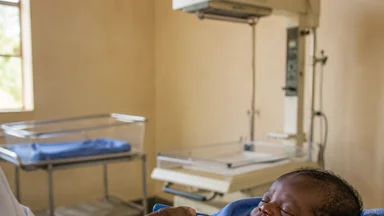
The human cost of nurse vacancies is most visible in maternal health. Rural facilities often lack staff for 24-hour delivery services. A woman arriving at night may find the maternity ward locked. The nurse on call may be at home, hours away. According to the Kenya Demographic and Health Survey (2022), the maternal mortality ratio in rural counties is 500–700 per 100,000 live births, compared to 200–300 in urban areas. Lack of skilled birth attendance is a major contributor. In Turkana County, a 2021 audit found that only 30% of deliveries were attended by a skilled health worker, compared to over 90% in Nairobi.
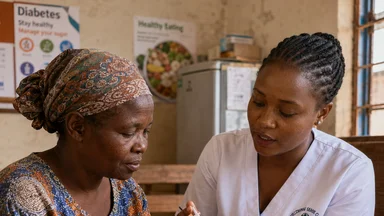
Chronic disease management also suffers. Nurses are the frontline providers for hypertension, diabetes, and HIV. In rural clinics, a single nurse may manage hundreds of patients, with little time for counselling or follow-up. Missed diagnoses are common. A 2023 study in Tropical Medicine and International Health found that rural patients with tuberculosis were diagnosed an average of 30 days later than urban patients, partly due to lack of nursing triage. This delay increases transmission and worsens outcomes. For HIV, rural patients are less likely to be retained in care, with a 2022 study showing a 15% higher loss-to-follow-up rate compared to urban areas.
Referral systems break down when no nurse is available to assess a patient and decide whether to send them to a higher level facility. Ambulance services are scarce, and families often must arrange transport themselves. The result is that many patients present late to hospitals, with advanced disease that could have been managed earlier. This echoes the challenges seen in other resource-limited settings, such as the gaps in insulin access in South Africa.
Community health workers (CHWs) are often overstretched to fill the gap. They are unpaid or minimally paid, with limited training. They can provide basic care, but they cannot replace a nurse for complex tasks like administering injectable antibiotics or managing obstetric emergencies. The government's plan to formalise CHWs is promising but slow. A pilot in Siaya County trained CHWs to manage childhood illnesses, reducing under-five mortality by 30%, but scaling up requires funding for salaries and supplies. The Community Health Promoters programme, launched in 2023, aims to pay each CHW a stipend of about 5,000 KES per month, but many counties have not yet disbursed funds.
The economic cost is also substantial. A 2022 World Bank report estimated that Kenya loses about 1.5% of GDP annually due to health workforce shortages, through lost productivity and preventable deaths. Rural areas bear the brunt, with higher rates of absenteeism and presenteeism (working while ill) among the few nurses who remain.
What Other Countries Do: Lessons from Ghana and Ethiopia
Kenya is not alone in facing rural nurse shortages. Ghana implemented a bonded training programme in the 2000s, requiring nursing graduates to serve in rural areas for three years. The programme increased rural posting compliance to about 60%, but retention after the bond period remained low. Ghana also introduced a rural allowance and housing schemes, which improved satisfaction but did not fully close the gap. A 2019 evaluation found that nurses who received housing were 40% more likely to stay beyond the bond period. However, the programme was costly, and some counties could not afford the housing.
Ethiopia took a different approach with its Health Extension Programme, launched in 2003. It trained thousands of health extension workers (HEWs)—women with one year of training—to provide basic preventive and curative services in rural communities. HEWs now cover most rural areas, and they have contributed to improvements in child survival and family planning. However, they are not nurses, and they cannot manage many acute conditions. Ethiopia still relies on nurses for higher-level care, and rural nurse vacancies remain a problem. A 2021 study found that rural health centres in Ethiopia had a nurse vacancy rate of about 40%, similar to Kenya's.
Both countries show that non-financial incentives matter. In Ghana, scholarships for children of rural health workers and priority for postgraduate training improved retention. In Ethiopia, community respect and career progression into nursing helped. Kenya could adapt these models, but political will and funding remain uncertain. The devolved system of government, where counties are responsible for health facilities, complicates national coordination. Some counties have better resources than others, creating inequities. For example, Kiambu County offers a housing allowance and a car loan scheme for rural nurses, while Turkana County cannot afford even basic pay.
A 2024 review by the African Population and Health Research Center concluded that no single intervention works. A package of financial incentives, housing, training, and career development is needed, tailored to local contexts. Kenya's current approach, they argue, is too piecemeal. The review also noted that community engagement is critical: in some areas, nurses left because they felt unsafe or unwelcome. Building trust between health workers and communities, through outreach and local hiring, can improve retention.
Another lesson comes from Thailand, which successfully reduced rural-urban disparities in health workforce through a combination of mandatory rural service, financial incentives, and expanding training in rural areas. Thailand's nurse-to-population ratio in rural areas is now close to urban levels. Key factors included strong political commitment, a unified health system, and sustained investment over decades. Kenya's devolved system makes such a unified approach more challenging, but not impossible.
A Way Forward: Targeted Incentives and Task Shifting
What could work? First, increase rural hardship pay to match private sector salaries in urban areas. This would require significant budget reallocation, but some counties are experimenting with top-ups from local revenue. For example, Makueni County has introduced a county-specific hardship allowance that brings rural nurse salaries to around 100,000 KES per month, which has reduced vacancy rates by 15% in two years. However, such initiatives depend on county revenue, which is volatile.
Second, expand nurse training in rural campuses. The Kenya Medical Training College has opened campuses in counties like Homa Bay and Kitui, but they are underfunded. Graduates from rural campuses are more likely to stay rural. A study of KMTC graduates found that those who trained in rural campuses were three times more likely to work in rural areas after graduation. However, these campuses lack equipment and qualified instructors. Investing in them could yield long-term dividends.
Third, formalise task shifting to community health workers. A national CHW programme, with standardised training, supervision, and pay, could relieve nurses of routine tasks like immunisation and family planning follow-up. This would free nurses for more complex care. The government's Community Health Promoters programme, launched in 2023, aims to do this, but rollout is slow and funding uncertain. A pilot in Busia County showed that CHWs could manage uncomplicated malaria and diarrhoea, reducing the burden on nurses by 30%. Scaling this requires political will and sustainable financing, perhaps through a dedicated health fund.
Fourth, create clear career progression for rural nurses. Currently, promotion often requires moving to a city. A rural career track with advanced training, specialist roles, and higher pay could make rural posts more attractive. Some counties have introduced "nurse practitioners" who can prescribe and manage chronic diseases, but this is not yet national. A national nurse practitioner programme, similar to those in South Africa and the US, could allow rural nurses to take on more responsibility and earn higher salaries. The Kenya Nursing Council has developed a framework for nurse practitioners, but it has not been fully implemented due to resistance from doctors' unions.
Finally, use digital health to support remote decision-making. Teleconsultation platforms can connect rural nurses with specialists in urban hospitals. A pilot in Kisumu County reduced referral delays for obstetric emergencies by 40%. Scaling such tools requires investment in internet and devices, but the potential is large. This is similar to the approach seen in Kisumu's maternity innovations, where simple technology improved outcomes. However, digital health is not a panacea: it requires reliable electricity, network coverage, and training. Many rural facilities lack these basics.
None of these are easy. They require sustained political commitment, funding, and coordination across levels of government. The alternative is a continued two-tier system where urban patients get care from experienced nurses—even if they are retired—while rural patients go without. That is not a sustainable path for a country aiming for universal health coverage. As Dr. Kamau puts it, "We have the solutions. What we lack is the will to implement them at scale."
This article is for informational purposes only and does not constitute professional medical or policy advice. Readers should consult official sources for guidance on health workforce issues.