Preterm Birth Prevention With Progesterone Reaches Clinics While Cervical Length Screening Stays Sporadic
Preterm birth—delivery before 37 weeks of gestation—kills roughly 1 million newborns each year and leaves many more with lifelong disabilities. Two evidence-based tools exist to reduce that toll: progesterone supplementation and cervical length screening. The first has made its way into clinics across much of the world. The second has not. The divergence stems from a fundamental asymmetry: a drug can be manufactured, stockpiled, and distributed, but a screening test requires equipment, training, and a system that acts on the result. Progesterone is a generic drug, cheap to produce, and can be given as an injection or vaginal suppository. Cervical length screening is a procedure that demands a skilled operator and a functioning ultrasound machine. The two interventions are yoked—screening without treatment is useless, and treatment without screening misses many who would benefit—but they travel at different speeds.
Two Interventions, One Problem – Why Uptake Diverges
Preterm birth is the single largest cause of neonatal mortality globally, responsible for about 35% of all newborn deaths. The burden is highest in South Asia and sub-Saharan Africa, where rates exceed 13% of live births, compared with 8–10% in high-income countries. Two preventive strategies have emerged from decades of research: administering progesterone to women at high risk, and using ultrasound to measure cervical length—a marker of impending labour.
Progesterone therapy reduces the risk of preterm birth by roughly 45% in women with a short cervix (less than 25 mm at mid-gestation), according to meta-analyses including the OPPTIMUM trial (2016) and earlier work by Fonseca and colleagues (2007). The hormone suppresses uterine contractility and prevents the cervical remodelling that precedes labour. Yet the screening needed to identify short-cervix women remains sporadic. In the United States, only about 60% of eligible pregnancies receive a cervical length measurement, per CDC data from 2020. In low-income countries, routine screening is virtually absent.
Why the gap? Cost is an obvious factor. A transvaginal ultrasound machine costs tens of thousands of dollars, and trained sonographers are scarce in rural areas. But clinical inertia also plays a role. Many providers still rely on historical risk factors—previous preterm birth, multiple gestation, smoking—that miss a large fraction of at-risk women. A woman with a short cervix and no prior preterm birth accounts for roughly 40% of all spontaneous preterm deliveries, yet she is invisible without screening.
The divergence in uptake reflects a deeper asymmetry: a treatment can be stockpiled and distributed, but a screening test requires equipment, training, and a system that acts on the result. Progesterone is a generic drug, cheap to manufacture, and can be given as an injection or vaginal suppository. Cervical length screening is a procedure that demands a skilled operator and a functioning ultrasound machine. The two interventions are yoked—screening without treatment is useless, and treatment without screening misses many who would benefit—but they travel at different speeds.
Progesterone: The Mechanism and the Evidence
Progesterone is often called the hormone that maintains pregnancy, and for good reason. It relaxes uterine smooth muscle, suppresses inflammatory pathways that trigger labour, and helps maintain the cervical mucus plug. In the second trimester, a drop in progesterone activity—either through receptor downregulation or local metabolism—can initiate the cascade of cervical shortening, membrane rupture, and contractions that ends in preterm birth.
Supplemental progesterone aims to counteract that drop. Two formulations have been studied extensively: 17α-hydroxyprogesterone caproate (17-OHPC), an injectable synthetic progestin, and vaginal progesterone, usually a gel or suppository. The landmark OPPTIMUM trial, published in 2016, randomised more than 1,200 women with a short cervix or previous preterm birth to vaginal progesterone or placebo. The result: a 34% reduction in preterm birth before 34 weeks, and a 38% reduction in neonatal death or severe morbidity. Earlier work by Fonseca and colleagues in 2007 found that vaginal progesterone cut the preterm birth rate by about 45% in women with a short cervix.
The World Health Organization now recommends progesterone for women with a prior spontaneous preterm birth, and for those with a short cervix detected on ultrasound. The American College of Obstetricians and Gynecologists endorses the same. Yet the evidence is not without nuance. The OPPTIMUM trial did not show a significant reduction in a composite of neonatal outcomes at two years of age, raising questions about long-term benefit. Some meta-analyses suggest that 17-OHPC is less effective than vaginal progesterone, and a 2023 Cochrane review called for more head-to-head trials.
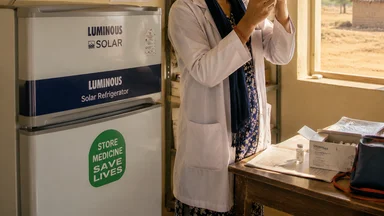
The effect size depends heavily on timing. Progesterone appears most effective when started before 24 weeks, with diminishing returns later in gestation. Adherence is also a challenge: weekly intramuscular injections require clinic visits, and vaginal suppositories can be messy and uncomfortable. In low-resource settings, supply chain interruptions for injectable progesterone are common, and cold-chain requirements for some formulations add another layer of complexity.
Cervical Length Screening – A Simple Test That Stays Underused
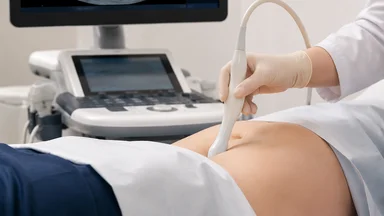
Cervical length measurement via transvaginal ultrasound is one of the most reproducible and predictive tests in obstetrics. The technique is standardised: the woman empties her bladder, the probe is placed in the anterior fornix, and the length of the closed cervix is measured from internal to external os. A length below 25 mm at 20–24 weeks of gestation flags a sharply increased risk of preterm birth. The shorter the cervix, the higher the risk—a 15 mm cervix carries a roughly 50% chance of delivery before 34 weeks without intervention.
The test takes about five minutes and causes minimal discomfort. Yet it is not performed routinely in most of the world. In the United States, a 2020 CDC survey found that only about 60% of obstetricians routinely measure cervical length in low-risk pregnancies. In many European countries, universal screening is recommended but not always reimbursed. In sub-Saharan Africa and South Asia, where the preterm birth rate is highest, the test is essentially unavailable outside a handful of research hospitals and private clinics.
The reasons are partly financial. An ultrasound machine suitable for transvaginal imaging costs between $20,000 and $60,000, and requires regular maintenance. Sonographers need training and certification, which is scarce in rural areas. But cost alone does not explain the gap. Even where machines exist, the test is often omitted because of a perception that it is unnecessary in low-risk women, or because the result would not change management—a circular logic when progesterone is not readily available.
There is also a cultural barrier. Transvaginal ultrasound is invasive and may be refused by some women, particularly in conservative settings. And false positives are a real concern: a short cervix can resolve spontaneously, and treating all women with a length below 25 mm would expose many to unnecessary medication. Still, the number needed to screen to prevent one preterm birth is estimated at around 200, which compares favourably with other accepted screening tests in pregnancy.
The Wealth Gradient: How Setting Dictates Care
The divergence between progesterone availability and cervical screening is most stark when viewed across the wealth gradient. In a private hospital in Nairobi, a woman can have her cervical length measured for the equivalent of $30 and receive vaginal progesterone if needed. In a public clinic in rural Kenya, neither service is available. The same pattern holds across India, Brazil, and much of Southeast Asia.
India offers a telling example. Vaginal progesterone is manufactured domestically and costs about $5 per dose, making it affordable even for many public health systems. But cervical length screening is largely confined to urban tertiary centres. A 2022 survey of Indian obstetricians found that fewer than 20% routinely measure cervical length, and most who do work in private practice. The result: women with a short cervix are identified only if they have a prior preterm birth—a criterion that misses roughly half of all cases.
Brazil's unified health system (SUS) covers progesterone for women with a prior preterm birth, but does not fund universal cervical length screening. A 2021 study in São Paulo found that only 12% of public maternity units had a protocol for cervical length measurement. In the private sector, screening is common, and progesterone is prescribed liberally. The gap mirrors the country's broader health inequality: women in the wealthiest quintile are three times more likely to receive any form of preterm birth prevention than those in the poorest.
Sub-Saharan Africa bears the heaviest burden. The region accounts for roughly 40% of global preterm births, yet cervical length screening is virtually nonexistent outside research settings. A 2023 systematic review found just four studies from the region that reported any cervical length data, all from referral hospitals. Progesterone is available in some countries—South Africa includes it in its essential medicines list—but without screening, it is prescribed empirically to women with historical risk factors, which captures only a fraction of those who would benefit.
Implementation Hurdles Beyond Cost
Money is not the only obstacle. Guideline awareness among providers is inconsistent, even in high-resource settings. A 2019 survey of US obstetricians found that one in five did not know the recommended screening cutoff of 25 mm, and many were unsure how to interpret a borderline result. In low-resource settings, where training is thinner, the knowledge gap is wider.
Fear of false positives leads to over-treatment in some contexts. A woman with a cervix of 24 mm at 22 weeks has a statistically elevated risk, but her absolute risk of preterm birth is still under 15%. Some clinicians argue that universal screening would medicalise millions of pregnancies unnecessarily, subjecting women to weekly injections or daily gels with side effects like nausea, breast tenderness, and mood changes. Others counter that the number needed to treat to prevent one preterm birth is about 10, which is comparable to other preventive interventions in obstetrics.
Patient adherence is another hurdle. Weekly intramuscular injections of 17-OHPC require clinic visits, which can be difficult for women who live far from a health facility or who have childcare or work obligations. Vaginal progesterone is easier to self-administer, but studies report adherence rates of only 60–70% in trial settings, and likely lower in routine care. In low-income countries, supply chain interruptions for injectable progesterone are common, and cold-chain requirements for some formulations add another layer of complexity. This problem is compounded by the lack of screening: even when progesterone is available, many women who could benefit never receive it because they are never identified.
No single global protocol exists for combined screening and treatment. The WHO recommends screening only where resources permit treatment, but that leaves a gap: many countries have the resources for one but not the other. A woman in rural Uganda might be able to get progesterone if she is diagnosed, but the diagnosis never comes. A woman in a US public clinic might be screened but then face prior-authorisation hurdles for the medication. The two pieces of the puzzle do not always connect.
Toward Equitable Prevention: What Works Now
Despite the barriers, some programs are showing that screening can be expanded even in low-resource settings. Rwanda's maternal health program, supported by Partners In Health, has integrated cervical length measurement into routine antenatal care at district hospitals. Nurses trained in transvaginal ultrasound perform the scan at 20–24 weeks, and women with a short cervix receive vaginal progesterone supplied through the national pharmacy. A 2022 evaluation found that the program reduced preterm birth rates by roughly 30% in participating districts.
Tele-ultrasound offers another avenue. In Mozambique, a pilot project allowed midwives at rural clinics to capture ultrasound images and transmit them to a radiologist in the capital for interpretation. Cervical length measurements were read remotely, and women with a short cervix were referred to a regional hospital for progesterone. The approach is not yet scaled, but it demonstrates that the technology barrier can be lowered.
Low-cost vaginal progesterone gel (branded as Crinone in some markets) has been subsidised in select countries through the UN Commission on Life-Saving Commodities. The gel costs about $2 per dose when procured in bulk, and can be stored at room temperature. However, the subsidy only covers a handful of countries, and supply is inconsistent.
Some researchers have proposed using bimanual examination—the traditional two-handed pelvic exam—to estimate cervical length, but the evidence is weak. A 2018 study in Malawi found that clinical assessment by midwives had a sensitivity of only 40% for detecting a short cervix, compared with ultrasound. The idea is appealing because it requires no equipment, but for now it remains unproven.
Another promising approach is task-sharing. In Bangladesh, a program trained community health workers to perform basic ultrasound screening using portable devices. Although cervical length measurement was not the primary focus, the model demonstrated that non-physicians can acquire ultrasound skills with adequate supervision. Extending this to cervical length screening could dramatically increase access in rural areas.
The Next Five Years – Closing the Screening Gap
New technologies may help close the gap. Point-of-care ultrasound devices, such as the Butterfly iQ, cost around $2,000—a fraction of a traditional machine—and can be operated with minimal training. Early studies show that midwives can learn to measure cervical length with these devices after a short course, with accuracy comparable to that of a sonographer. If validated in larger trials, this could bring screening to primary health centres in low-resource settings.
Artificial intelligence algorithms are also being developed to automate cervical length measurement. A 2023 proof-of-concept study trained a deep-learning model to identify the internal and external cervical os from ultrasound images, achieving agreement with expert readers of over 90%. If integrated into portable ultrasound devices, such algorithms could allow a nurse to obtain a measurement without needing to interpret the image herself—a step toward task-sharing.
Trials of self-administered progesterone suppositories are underway in India, with the goal of reducing the need for clinic visits. Early results suggest that adherence is higher with a self-administered daily suppository than with weekly injections, and that efficacy is similar. If these findings hold, the treatment side of the equation could become simpler, making the absence of screening even more glaring.
Policy change will be needed to bundle screening with existing antenatal ultrasound. Many low-income countries already perform a single ultrasound at 20–24 weeks to assess fetal anatomy and growth. Adding a cervical length measurement to that exam adds only a few minutes and no additional equipment. The WHO could update its guidelines to recommend routine cervical length assessment at the same scan, at least in settings where progesterone is available. Without such a policy shift, the screening gap will persist, and progesterone's potential will remain only half-realised.
Counter-arguments deserve consideration. Some experts worry that universal screening could increase anxiety and lead to unnecessary interventions. A short cervix is a risk factor, not a diagnosis, and many women with a short cervix deliver at term without any treatment. The number needed to treat to prevent one preterm birth is about 10, meaning nine women receive progesterone who would not have delivered early. This trade-off is common in preventive medicine, but it must be weighed against the burden of daily medication and the potential for side effects. In settings where progesterone is not readily available, screening may be futile or even harmful if it identifies risk without offering a remedy. These concerns underscore the need for context-specific implementation.
This article is for informational purposes only and does not constitute personalised medical advice. Pregnant women should discuss screening and treatment options with their healthcare provider.