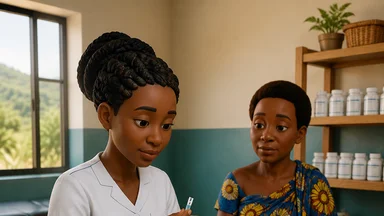
Lagos Public Clinics Stock Malaria RDTs While Microscopy Malaria Diagnosis Rates Stall
In Lagos State, public clinics have ample stocks of rapid diagnostic tests (RDTs) for malaria. Yet the proportion of suspected malaria cases confirmed by microscopy—the gold standard for species identification and parasite quantification—has remained stubbornly low. A 2024 survey of primary health centers in Lagos found that fewer than 30% of clinicians routinely used microscopy when it was available. This disconnect between supply and practice is not unique to Lagos, but it is particularly stark given the high malaria burden in Nigeria, which accounts for roughly 27% of global malaria cases.
RDTs Flood Lagos Clinics, Yet Microscopy Diagnosis Stalls
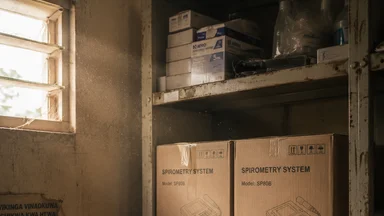
Public clinics across Lagos have received consistent shipments of RDTs through donor-funded programs and the National Malaria Elimination Programme. In many facilities, RDTs are stacked in storerooms, while microscopy slides and Giemsa stain are in short supply. The result: clinicians reach for RDTs by default, even when national guidelines recommend confirmatory testing with microscopy for all suspected malaria cases.
Microscopy rates in Lagos have not improved over the past five years, according to data from the Lagos State Ministry of Health. In a 2023 facility assessment, only 12 of 44 primary health centers had functional microscopes, and fewer than half of those had trained microscopists. Meanwhile, RDT stock-out rates were below 5% for most of the year.
The gap is not due to lack of awareness. Most clinicians know that microscopy can detect low-density infections, identify non-falciparum species, and distinguish malaria from other febrile illnesses. Yet in practice, they often treat based on symptoms alone or rely on a negative RDT to rule out malaria—a decision that may miss cases with parasitemia below the RDT detection threshold of roughly 100–200 parasites per microliter.
This pattern mirrors findings from other West African settings. A 2022 study in Ghana reported that only 40% of febrile patients received microscopy, despite national guidelines mandating it. In Lagos, the stall in microscopy uptake has persisted even as RDT distribution has expanded.
Why Rapid Tests Outpace Microscopy in Practice
RDTs offer clear operational advantages. They deliver results in 15 minutes, require no electricity or laboratory infrastructure, and can be performed by a community health worker with minimal training. In a busy Lagos clinic seeing 100 or more patients per day, an RDT is simply faster and easier than preparing a blood film, staining it, and waiting for a microscopist to read it.
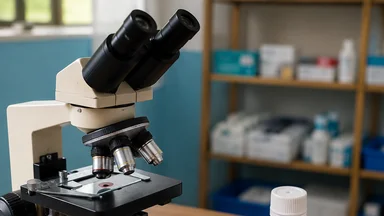
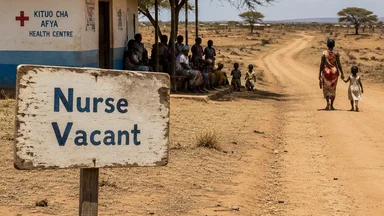
Microscopy, by contrast, demands trained technicians, well-maintained equipment, and a reliable supply of reagents. In many primary health centers, the microscopist position is vacant or filled by a staff member who has not received formal training. Reagents such as Giemsa stain and buffer tablets often run out, and microscopes may sit unused due to broken bulbs or missing lenses.
Stock-outs of microscopy consumables are a recurring problem. A 2024 analysis of the Lagos State Central Medical Store found that RDTs were procured in bulk and had a surplus of roughly three months' supply, while Giemsa stain and immersion oil were frequently back-ordered. Clinicians understandably use what is available, and RDTs are almost always available.
Time pressure also drives the preference for RDTs. In facilities where a single clinician sees dozens of patients before noon, sending a sample to the lab adds a 30- to 60-minute wait. Patients may leave before results come back, or clinicians may prescribe antimalarials empirically rather than risk losing them to follow-up. RDTs allow same-visit diagnosis and treatment, which aligns with patient expectations and clinic workflow.
Evidence Shows Microscopy Still Matters
The World Health Organization continues to recommend microscopy as the preferred method for malaria diagnosis when it is available and of good quality. Microscopy can identify the infecting Plasmodium species—crucial in regions where P. vivax or P. ovale occur, as they require different treatment regimens. It can also quantify parasite density, which helps assess disease severity and monitor treatment response.
RDTs, while highly sensitive for P. falciparum at densities above 100–200 parasites per microliter, miss low-density infections. A 2023 systematic review found that RDTs had a pooled sensitivity of 85% for symptomatic malaria, but dropped below 50% for asymptomatic infections. In chronic malaria, where parasitemia may fluctuate, a single negative RDT can give false reassurance.
False negatives are not merely academic. In a study conducted in Lagos in 2022, 8% of febrile children with negative RDTs had detectable parasitemia on microscopy. Some of these children later developed severe malaria. Relying solely on RDTs risks delayed treatment, especially in populations with partial immunity who may harbor low-density infections.
Microscopy also serves as a quality control check for RDTs. When RDTs are used exclusively, there is no way to detect batch failures or operator errors. In settings where RDTs are stored in hot, humid conditions—common in Lagos—false negatives due to heat degradation are a known concern.
Clinician Behavior Diverges From Guidelines
Nigeria's National Malaria Diagnostic and Treatment Guidelines, updated in 2023, state that all suspected malaria cases should be confirmed by either microscopy or RDT. However, the guidelines do not prioritize one over the other, leaving room for interpretation. Many clinicians interpret this as a green light to use RDTs exclusively.
Time pressure and patient volume are major drivers. In a 2024 survey of clinicians in Lagos public clinics, 72% said they used RDTs because they were faster, and 58% said microscopy was too slow for their workflow. Only 22% said they used microscopy routinely. The survey also found that clinicians with more years of experience were less likely to use microscopy, possibly because they had developed confidence in clinical diagnosis or RDTs.
Another factor is the perception that RDTs are "good enough." In focus group discussions, clinicians expressed trust in RDTs based on their own experience of seeing patients improve after a positive RDT-guided treatment. They rarely encountered a case that turned out to be a false negative, because those patients often returned to a different clinic or were lost to follow-up.
There is also a perverse incentive: in some facilities, clinicians receive a small bonus for each RDT performed, tied to donor reporting requirements. Microscopy, by contrast, is not incentivized. This financial nudge subtly shifts practice away from the more labor-intensive method.
Supply Chain Shapes Diagnostic Choices
The supply chain for malaria diagnostics in Lagos is a tale of two systems. RDTs are procured through the Global Fund, the President's Malaria Initiative, and other donors, with predictable funding and centralized distribution. They arrive in Lagos in bulk and are pushed down to clinics, often with little input from facility staff about what they need.
Microscopy consumables, on the other hand, are procured through the Lagos State government budget, which is less reliable. Orders may be delayed, quantities may be insufficient, and distribution is sometimes erratic. A 2023 audit of the Lagos State Central Medical Store revealed that Giemsa stain was out of stock for 14 weeks in the first half of the year, while RDTs were overstocked by 40%.
Clinicians adapt to what is available. If a clinic has RDTs but no Giemsa stain, microscopy is not an option. Over time, the habit of using RDTs becomes entrenched, and even when reagents are available, staff may not switch back. The supply chain thus shapes diagnostic practice more powerfully than any guideline.
This imbalance is not inevitable. Some states in Nigeria, such as Oyo, have successfully integrated RDT and microscopy by ensuring that both are stocked and by training staff to use them in tandem. In Oyo's pilot program, clinicians were required to perform microscopy on every fifth patient as a quality check, which improved both skills and confidence.
A counter-argument worth considering is that the push for microscopy may be misplaced in resource-limited settings. Critics argue that the operational burden of microscopy—training, maintenance, quality assurance—outweighs its benefits when RDTs already cover the majority of symptomatic cases. In a cost-effectiveness analysis from Tanzania, RDT-based strategies were found to be more cost-effective than microscopy in settings with moderate to high malaria transmission. However, that analysis assumed RDT sensitivity above 95%, which may not hold under field conditions in Lagos. The trade-off between accuracy and feasibility is real, and the optimal mix likely depends on local context, including transmission intensity, patient demographics, and laboratory capacity.
Training Gaps Undermine Microscopy Use
The shortage of trained microscopists is a critical bottleneck. Many lab technicians in Lagos primary health centers have had no formal training in malaria microscopy. A 2024 assessment found that only 35% of lab staff at these centers had received any malaria microscopy training in the past three years. Refresher courses are rare, and supervision is minimal.
Without confidence in their own microscopy skills, clinicians and lab staff default to RDTs. They know that a poorly prepared or read blood film can give a false negative, so they choose the test they trust more—even if that trust is misplaced. The Malaria Microscopy Quality Assurance Scheme, a national program designed to standardize training and supervision, has been underutilized in Lagos due to funding constraints and staff turnover.
Task-shifting microscopy training to community health workers has been proposed as a solution. In pilot programs in rural areas, health workers trained to prepare and read blood films achieved accuracy rates above 90% when supervised. However, scaling this in Lagos faces challenges: high patient volumes, limited supervision, and the perception that microscopy is a specialist skill.
Digital microscopy tools, such as smartphone attachments that capture and transmit images for remote reading, offer a way to extend supervision. A small pilot in Lagos in 2023 showed that remote experts could provide real-time feedback on blood film quality, improving accuracy. But such tools require investment and internet connectivity, which remain patchy in many clinics.
Another angle is the role of diagnostic stewardship programs. In some settings, interventions that pair training with regular feedback on diagnostic accuracy have been shown to improve both RDT and microscopy use. For example, a cluster-randomized trial in Uganda found that facilities receiving quarterly feedback on malaria test positivity rates and quality scores increased microscopy use by 15% over one year. Similar approaches could be adapted for Lagos, though they require a functioning data system and supervisory staff.
Practical Steps to Rebalance Diagnosis
Rebalancing malaria diagnosis in Lagos will require interventions at multiple levels. First, supply chain reforms should ensure that microscopy consumables are as reliably stocked as RDTs. This may involve pooled procurement, better forecasting, and dedicated budget lines for reagents. The Lagos State Central Medical Store could adopt a "no stock-out" policy for essential microscopy items, similar to the one already in place for RDTs.
Second, training programs must be revitalized. The Malaria Microscopy Quality Assurance Scheme should be fully implemented in Lagos, with regular refresher courses and on-site supervision. Task-shifting to community health workers, combined with digital supervision tools, could expand the microscopy workforce without requiring a large number of specialist technicians.
Third, clinical guidelines should be more prescriptive about when microscopy is indicated. For example, guidelines could recommend microscopy for all children under five, pregnant women, and patients with suspected severe malaria, while allowing RDTs for uncomplicated cases in adults. This would target microscopy to the populations most at risk from low-density infections.
Fourth, incentives should align with best practice. Instead of rewarding RDT volume, clinics could be evaluated on the proportion of cases that receive confirmatory testing by either method, with a bonus for facilities that achieve high microscopy rates. This would encourage clinicians to use both tests appropriately.
Fifth, diagnostic stewardship programs that provide regular feedback on test performance and case outcomes could help clinicians recalibrate their trust in RDTs versus microscopy. Such programs have been effective in other infectious disease contexts, such as tuberculosis and HIV, and could be adapted for malaria.
Finally, pilot programs like the one in Oyo State should be studied and scaled. In Oyo, integrating RDT and microscopy at point of care, with regular quality checks, improved diagnostic accuracy and clinician confidence. Similar programs in Lagos could demonstrate that microscopy is not an outdated alternative but a complementary tool that strengthens malaria diagnosis.
None of these steps are easy. They require sustained political commitment, funding, and a willingness to challenge entrenched habits. But the cost of inaction is measurable in missed diagnoses, delayed treatment, and continued uncertainty about the true malaria burden in Lagos. As long as microscopy rates stall, the picture of malaria in the city will remain incomplete.
For readers interested in similar gaps between policy and practice, see our coverage of South African public hospitals stocking antiretrovirals despite CD4 machine downtime and rural Kenyan nurse vacancies remaining unfilled while urban clinics hire retired staff.
This article is for informational purposes only and does not constitute medical advice. Diagnostic decisions should be made in consultation with a qualified healthcare professional.