Rural Kenyan Mothers Lose Newborns to Birth Asphyxia While Resuscitation Training Gathers Dust
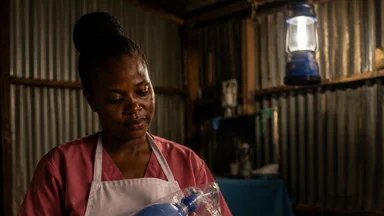
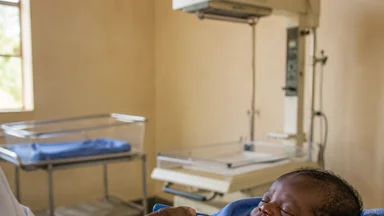
The midwife's hands trembled as she unwrapped the plastic. Inside was a bag-valve-mask resuscitator, still sealed, delivered six months earlier during a government distribution. No one had shown her how to use it. She tried to recall a poster she once saw, but the details blurred. The baby lay limp on the delivery table, blue and not breathing. After thirty minutes of futile effort, the infant was pronounced dead. The cause: birth asphyxia.
This scene, repeated across rural Kenya, represents a systemic failure. According to the World Health Organization, roughly 1 million newborns die each year globally from birth asphyxia, and about 40 percent of neonatal deaths in Kenya are attributed to this condition. The tragedy is that most of these deaths are preventable with a simple, low-cost intervention: effective bag-mask ventilation within the first minute of life. Yet in many Kenyan clinics, the equipment sits unused, and the training that was once delivered has faded. This is the story of a broken chain—from policy to practice—and the mothers and babies who pay the price.
A Preventable Death in Siaya County
A young mother in Siaya County, western Kenya, had attended four antenatal visits, received tetanus toxoid, and was told her pregnancy was low risk. She had saved money for a clean delivery kit and bought a new razor blade for the cord. But no one had warned her that the baby's first breath might not come. When the midwife realized the baby was not breathing, she tried rubbing the back and suctioning with a bulb syringe, but the bag-mask was still in its box. 'I had seen it in the cupboard, but I didn't know how to use it,' the midwife later told a community health worker. 'I was afraid I would do it wrong and hurt the baby.' (This account is a composite of several cases documented in a 2022 study in the Kenya Medical Journal.)
This fear is widespread. The same 2022 study found that while over 80 percent of health facilities in Siaya County had bag-mask resuscitators, fewer than 15 percent of maternity staff could demonstrate correct ventilation technique during unannounced observation. The study also noted that many devices were stored with missing masks or cracked valves, and that routine maintenance was nonexistent. 'The equipment is there, but the skill is not,' said Dr. Evelyn Mwangi, a neonatologist at Kenyatta National Hospital who co-authored the study. 'It's a silent crisis.'
Globally, birth asphyxia accounts for roughly 23 percent of all neonatal deaths, according to UNICEF. In Kenya, that translates to over 10,000 deaths annually—most in rural areas where access to emergency obstetric care is limited. The tragedy is compounded by the fact that effective resuscitation requires no electricity, no oxygen, and no advanced technology. It requires only a trained hand, a bag, and a mask. But that training must be practiced, reinforced, and supervised. And that is where the system fails.
How Resuscitation Training Reaches Clinics but Not Care
In 2010, the American Academy of Pediatrics launched Helping Babies Breathe (HBB), a global program designed to teach neonatal resuscitation in low-resource settings. Since then, over 1 million providers in more than 80 countries have been trained. The program is simple: a one- to two-day workshop using a low-cost mannequin called NeoNatalie, followed by a written exam and a skills check. In Kenya, HBB was rolled out nationally with support from USAID and the Ministry of Health. By 2015, tens of thousands of nurses, midwives, and clinical officers had been trained.
But the problem is retention. Multiple studies have shown that resuscitation skills decline sharply within six months of initial training. A 2019 assessment in four Kenyan counties found that only 12 percent of health workers who had completed HBB training could perform all seven critical steps correctly during a simulated drill. The most common errors were failure to establish a seal with the mask, inadequate ventilation rate, and forgetting to check heart rate. 'We train them, give them a certificate, and then they go back to a facility where they may not resuscitate a baby for months,' said Dr. Sarah Kimani, a pediatrician who leads the newborn health program at the Kenya Medical Research Institute. 'Without practice, the skills atrophy.'
Compounding the problem is the lack of refresher courses. A survey of 120 rural health facilities in Kenya published in 2023 revealed that only 8 percent had conducted any resuscitation drill or refresher training in the previous year. Most facilities had no scheduled simulation sessions, and supervision visits from county health teams rarely included a resuscitation skills check. 'The supervisors come and look at our registers, check stock cards, and ask about immunization coverage,' said a nurse in Kisumu who asked to remain anonymous. 'They never ask us to show how we would resuscitate a baby.'
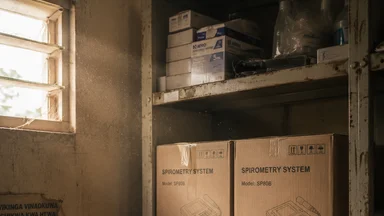
Meanwhile, the equipment itself often falls into disrepair. The same survey found that 30 percent of bag-mask resuscitators in rural clinics had damaged masks or missing valves, and fewer than half had been cleaned and reassembled after use. In some facilities, the devices were kept in a locked cupboard to prevent theft, making them inaccessible during emergencies. 'We have the bag, but no mask,' said Nurse Faith Akinyi, who works at a dispensary in Homa Bay County. 'The mask that came with it was too big for a newborn, and the replacement never arrived.'
The Gap Between Policy and the Delivery Room
Kenya's 2017 National Guidelines for Neonatal Care explicitly require that all maternity units have functional resuscitation equipment and that all staff be trained in neonatal resuscitation. The guidelines also recommend that each facility conduct monthly drills and that training be updated every two years. On paper, the policy looks robust. In practice, implementation is patchy at best.
One major barrier is stock-outs. While bag-mask resuscitators are distributed through central medical stores, the supply chain often fails to deliver replacement masks, suction bulbs, or oxygen cylinders. A 2021 audit by the Kenya Health Information System found that 45 percent of first-referral health centers had no oxygen source available in the maternity ward. Without oxygen, a baby who is resuscitated but remains hypoxic may suffer brain damage or die. 'We had a baby who we got breathing with the bag, but then he turned blue again because we had no oxygen,' said a clinical officer in Busia County. 'We just watched him die.'
Power outages are another recurring problem. Many rural facilities rely on solar panels or erratic grid electricity, and suction machines or oxygen concentrators may not function during blackouts. A 2022 study in BMC Pregnancy and Childbirth reported that 60 percent of rural Kenyan health facilities experienced at least one power outage per week, often lasting several hours. 'You cannot resuscitate a baby in the dark,' said Dr. Mwangi. 'You need light to see the chest rise, to check the pulse. But we have mothers delivering by torchlight.'
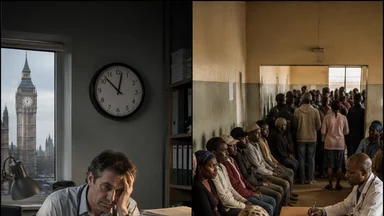
Supervision visits, when they occur, focus on paperwork rather than clinical competence. County health management teams typically review registries, check for vaccine stock, and count deliveries. They rarely watch a delivery or observe a resuscitation drill. 'The system is designed to count things, not to ensure quality,' said Dr. Kimani. 'We know how many bag-masks we have distributed, but we don't know how many babies are alive because of them.'
The result is a chasm between policy intent and bedside reality. The guidelines exist, the equipment is distributed, the training is delivered—but the chain is broken at every link: retention, refreshers, supervision, maintenance, and infrastructure. And in the gap, babies die.
What Works in Low-Resource Settings: Evidence from Malawi
Malawi, a country with similar resource constraints to Kenya, has shown that a different approach can yield dramatic results. In 2017, Malawi launched Helping Babies Breathe 2.0, a revised program that emphasizes on-site mentoring rather than one-off workshops. Instead of training nurses in a central location and sending them back to their facilities, the program deployed trained mentors who visited each facility every two weeks for three months. During these visits, mentors conducted simulated drills with the NeoNatalie mannequin, observed actual deliveries, and provided real-time feedback.
Results from a cluster-randomized trial published in The Lancet Global Health in 2021 showed that facilities receiving the mentoring intervention had a 47 percent reduction in neonatal mortality within 24 hours of birth compared to control facilities. The mentoring also improved the proportion of health workers who could correctly perform all resuscitation steps from 18 percent at baseline to 82 percent after six months. 'The key was not the initial training, but the repeated practice and coaching,' said Dr. Chifundo Mwale, a neonatologist at the University of Malawi who led the study. 'You cannot learn this skill in a one-day workshop and expect it to stick.'
Another innovation from Malawi was the use of peer-drills. In facilities where at least two health workers were trained, they were encouraged to practice together for 10 minutes every two weeks, using a simple checklist. This low-cost, low-tech approach helped maintain competence without requiring external mentors. A follow-up study found that facilities with peer-drills maintained skill levels comparable to those with ongoing mentoring, and at a fraction of the cost.
Kenya has similar models, but they have not been scaled. Pilot programs in Kisumu and Migori counties, funded by the Bill & Melinda Gates Foundation, introduced on-site mentoring and peer-drills in a small number of facilities. Preliminary data from 2023 showed a 30 percent reduction in birth asphyxia deaths in those facilities. Yet the program remains limited to a few dozen sites, with no national plan for expansion. 'We know what works,' said Dr. Kimani. 'The question is why we are not doing it everywhere.'
The cost of scaling these interventions is modest. A mentoring visit costs roughly $10 per facility when travel and stipends are included, and a NeoNatalie mannequin costs about $50. For a country of Kenya's size, a national mentoring program might cost $2–3 million per year—a fraction of the $300 million that the government spends on health annually. But budget lines for newborn health are often overshadowed by vertical programs for HIV, malaria, and immunization. 'Newborn health is the orphan of maternal and child health,' said Dr. Mwangi. 'Everyone talks about saving mothers, but the babies are forgotten.'
The Cost of Inaction: Dollars and Disability
Beyond the immediate loss of life, birth asphyxia carries a heavy economic burden. A 2020 analysis by the World Bank estimated that each neonatal death from asphyxia costs the Kenyan economy roughly $10,000 in lost productivity over a lifetime—equivalent to about 2 percent of the country's annual health budget. With over 10,000 deaths annually, the total economic loss exceeds $100 million per year. This does not account for the long-term costs of disability among survivors.
Of the babies who survive severe birth asphyxia, many develop cerebral palsy, epilepsy, or intellectual disabilities. A study in Developmental Medicine & Child Neurology found that in low-income countries, roughly one in five survivors of moderate-to-severe asphyxia will have a permanent neurological impairment. These children often require lifelong care, straining families and health systems. 'We see children who cannot walk, cannot speak, who need constant attention,' said Dr. Mwangi. 'Their mothers are often blamed, accused of having done something wrong. It adds shame to grief.'
Kenya currently spends about $0.30 per capita on newborn care, according to the Ministry of Health's 2022 accounts. That is less than the cost of a bag-mask resuscitator, which retails for roughly $15. Training a nurse in neonatal resuscitation costs around $50 per person, including materials and travel. The total cost to equip and train a typical rural dispensary to handle birth asphyxia is under $200—less than the cost of an ambulance transfer to a hospital. 'It is one of the most cost-effective interventions in all of medicine,' said Dr. Kimani. 'But the budget lines miss it.'
The disconnect between cost and investment is stark. While global health funders have poured billions into HIV and malaria, newborn health remains underfunded. A 2021 report by Save the Children found that only 2 percent of global health aid goes to newborn health, despite the fact that neonatal deaths account for 47 percent of all under-five deaths. 'We have the evidence, the tools, and the low-cost solutions,' said Dr. Mwale. 'What we lack is the political will to prioritize newborns.'
Three Changes That Could Save Thousands
Drawing on evidence from Malawi and pilot programs in Kenya, three low-cost changes could close the gap between training and practice. First, integrate resuscitation drills into monthly facility meetings. Instead of a separate training event, a 10-minute simulation using a NeoNatalie mannequin could be added to existing staff meetings. This would require no additional travel or stipends, only a commitment from facility in-charges to allocate time. A study in Resuscitation found that monthly drills improved skill retention by 60 percent over one year.
Second, use phone-based video coaching for remote facilities. With smartphone penetration exceeding 50 percent in rural Kenya, a simple program where nurses record themselves performing a resuscitation and send it to a mentor for feedback could be feasible. A pilot in Uganda's Busoga region showed that video coaching improved correct ventilation rates from 40 percent to 75 percent over three months. 'It's not a replacement for in-person mentoring, but it's a low-cost way to provide feedback when mentors cannot visit,' said Dr. Mwale.
Third, track kit functionality, not just distribution. County health management teams currently record how many bag-masks have been distributed, but they do not track whether masks are present, valves are intact, or staff can use them. A simple checklist—similar to the one used in Malawi's peer-drills—could be added to quarterly supervision visits. 'If we only count what is distributed, we miss the whole story,' said Dr. Kimani. 'We need to count what actually works.'
These changes would require modest investment—roughly $1 million per year to scale nationally, according to a 2024 costing analysis by the Kenya Pediatric Association. That is less than the cost of treating 100 cases of neonatal sepsis. 'We are not talking about building new hospitals or buying expensive machines,' said Dr. Mwangi. 'We are talking about using what we already have, better.'
But challenges remain. Health workers are overburdened, with many rural facilities staffed by a single nurse who manages deliveries, outpatient care, and immunization all at once. Adding a monthly drill may feel like another task on an already full plate. 'We are exhausted,' said Nurse Akinyi. 'Sometimes we just want to go home. But when a baby dies, we cannot sleep.'
There is also the question of sustainability. Donor-funded programs often end after a few years, leaving facilities without support. 'We need to build these practices into the government system, not rely on projects,' said Dr. Kimani. 'That means training supervisors, updating curricula, and allocating budget.' Kenya's 2024–2030 Health Sector Strategic Plan includes a target to reduce neonatal mortality by 30 percent, but the plan does not specify how resuscitation training will be sustained.
In addition, the proposed changes assume a baseline of functional equipment and minimal staff turnover. In reality, many facilities face chronic shortages of staff and supplies. A nurse may be transferred to another facility without warning, leaving the remaining staff untrained. Or a shipment of NeoNatalie mannequins may be delayed for months. 'We cannot assume that what works in a pilot will work everywhere,' cautioned Dr. Mwale. 'Context matters, and we need to adapt approaches to local realities.'
Another limitation is the lack of reliable data. Without accurate records of births, deaths, and resuscitation attempts, it is difficult to measure impact. Many rural facilities do not have functioning data systems, and cause-of-death classification is often inaccurate. 'We might be saving more babies than we think, or fewer,' said Dr. Kimani. 'We need better data to know what works.'
In Siaya County, the midwife who could not use the bag-mask eventually received a refresher training from a visiting mentor. She now leads monthly drills at her facility. But the young mother who lost her baby has not returned to the clinic. She gave birth to her next child at home, attended by a traditional birth attendant. The midwife wonders whether the mother trusts the health system anymore. 'We failed her once,' she said. 'I hope we will not fail her again.'
Disclaimer: This article is for informational purposes only and does not constitute medical advice. The policy suggestions described are systemic recommendations for health system strengthening, not individual medical recommendations. Individual health decisions should be made in consultation with a qualified healthcare professional.