Huye District Diabetic Patients Receive Metformin While HbA1c Testing Waits Six Months
In the rolling hills of Rwanda's Huye District, public health centers stock metformin, the first-line oral medication for type 2 diabetes. Patients collect their monthly supply, often without ever having their HbA1c measured—a test that offers a window into their average blood glucose over the previous two to three months. For many, the wait for an HbA1c result stretches six months or more. This gap between treatment and monitoring means patients receive pills without knowing whether their glucose is truly controlled. Clinicians adjust doses based on fasting glucose readings alone, a snapshot that can miss dangerous post-meal spikes. The tension is stark: therapy is available, but the tool to guide it is not.
Metformin Arrives, HbA1c Doesn't: The Gap in Huye
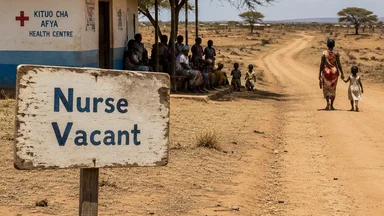
Rwanda's public health system has made notable strides in non-communicable disease care. The country's network of health centers and district hospitals now routinely dispense metformin, often free of charge or at minimal cost. In Huye District, patients with type 2 diabetes can walk into their local clinic and receive a 30-day supply. Yet the same clinics rarely offer HbA1c testing on site. Instead, blood samples must be sent to the central laboratory in Kigali, roughly a two-hour drive away.
The journey of a blood sample from Huye to Kigali is fraught with delays. Buses carry coolers of specimens along winding roads; results are printed and returned weeks or months later. A 2024 audit of Rwanda's national laboratory system found that rural districts experienced average turnaround times of 4 to 7 months for HbA1c. For patients whose glucose control deteriorates gradually, that delay can mean the difference between early intervention and irreversible complications.
Clinicians in Huye rely on fasting plasma glucose measured at the point of care. A finger-prick test gives a number in seconds, but it reflects only a single moment. A patient who fasted overnight may show a normal reading, yet their HbA1c could be elevated from daytime spikes. Without the longer view, doctors cannot confidently adjust metformin doses or decide when to add insulin. The result is a treatment plan built on incomplete information.
The consequences ripple beyond individual care. District health officers struggle to allocate resources when they lack population-level data on glycemic control. Programs that track diabetes outcomes depend on HbA1c as a key indicator. Without it, the true burden of uncontrolled diabetes in Huye remains hidden.
Why HbA1c Matters: The Biology of Glycation
Hemoglobin A1c is a measure of how much glucose has attached to hemoglobin proteins in red blood cells. This process, called glycation, occurs continuously over the lifespan of a red blood cell—roughly 120 days. The more glucose in the blood, the more glycation occurs. HbA1c thus reflects the average blood glucose concentration over the preceding 2 to 3 months, smoothing out daily fluctuations.
Fasting glucose, by contrast, captures only the glucose level after an overnight fast. It can miss postprandial spikes that occur after meals. These spikes are particularly damaging to small blood vessels. Over time, elevated HbA1c correlates strongly with the development of diabetic retinopathy, nephropathy, and neuropathy. A landmark trial, the UK Prospective Diabetes Study, showed that each 1% reduction in HbA1c reduced the risk of microvascular complications by roughly 35%.
The World Health Organization recommends HbA1c as a diagnostic and monitoring tool for diabetes, with a target of below 7% (53 mmol/mol) for most adults. Without this metric, clinicians cannot assess whether a patient's regimen is adequate. They may keep a patient on metformin alone when insulin is needed, or fail to recognize that a patient is experiencing hypoglycemia from overtreatment.
In Huye, the absence of HbA1c means that decisions about therapy are made in the dark. A patient whose fasting glucose is 120 mg/dL might be considered controlled, yet their HbA1c could be 9%, indicating significant hyperglycemia. The biology of glycation demands a longer view than a single finger-prick can provide.
Supply Chain: Why HbA1c Tests Are Scarce
The reasons for the six-month wait are rooted in the supply chain. HbA1c assays require reagents that are expensive and imported. Most are produced by a handful of manufacturers—Roche, Abbott, Siemens—and distributed through regional wholesalers. In Rwanda, the central laboratory in Kigali procures reagents in bulk, but shipping and customs delays are common.
Once reagents arrive, they must be stored at controlled temperatures. Many HbA1c analyzers require stable electricity and regular calibration. Rural clinics often lack the infrastructure to host such machines. Power outages can ruin reagent batches, and maintenance technicians are scarce outside Kigali. The result is a centralized testing model: samples must travel to the capital.
Transport itself introduces delays. Blood samples for HbA1c must be kept cool and processed within a certain window. In Huye, clinic staff collect samples and place them in coolers, which are then picked up by a courier service that runs twice a week. If the courier misses a pickup, the sample waits another three days. Once in Kigali, the lab processes samples in batches, often waiting for a minimum number before running the assay. Results are printed and sent back via the same courier route.
Cold chain failures are another obstacle. During Rwanda's rainy seasons, roads can become impassable, and cooler temperatures may not be maintained. A 2023 study from the University of Rwanda found that up to 15% of HbA1c samples from rural districts were rejected due to hemolysis or clotting. For patients, a rejected sample means starting the waiting process over.
What Happens Without Monitoring: A Case Study
John N., a 52-year-old farmer in Huye, was diagnosed with type 2 diabetes two years ago at a local health center. He was started on metformin 500 mg twice daily and told to return every three months for a fasting glucose check. His fasting readings at clinic visits were consistently between 110 and 130 mg/dL, which the nurse considered acceptable. No HbA1c was ever measured.
Over the following year, John noticed his vision blurring, especially when reading or working in bright sunlight. He assumed it was age-related and did not mention it at his next visit. By the time he reported the symptom, his visual acuity had deteriorated significantly. A referral to the district hospital led to a diagnosis of diabetic retinopathy with macular edema. He needed laser therapy, available only at a referral hospital in Kigali.
John's case is not unusual. Without HbA1c monitoring, his gradual rise in average glucose went undetected. The fasting glucose readings, taken after he had fasted overnight, were falsely reassuring. By the time retinopathy was diagnosed, damage was already advanced. He now faces multiple trips to Kigali for treatment, losing days of work and incurring travel costs his family can ill afford.
His story illustrates the cost of a monitoring gap. Metformin alone is not enough; without knowing whether glucose is controlled, the medication becomes a blind intervention. For patients like John, the six-month wait for an HbA1c result is not an inconvenience—it is a missed opportunity to prevent irreversible harm.
Another patient, Marie A., a 60-year-old market vendor, experienced a different trajectory. She had been on metformin for three years with stable fasting glucose around 115 mg/dL. A nurse at the health center decided to send her sample for HbA1c testing due to a research study. The result came back five months later at 8.5%. By then, Marie had already developed numbness in her feet—a sign of peripheral neuropathy. Had the result been available sooner, her metformin dose could have been increased or insulin added earlier. The delay cost her nerve function that may never fully recover.
These cases underscore the human toll of a broken monitoring system. Each month without an HbA1c result is a month of uncontrolled glucose, quietly damaging blood vessels and nerves. The numbers on a lab slip are not abstract—they correspond to real risks of blindness, kidney failure, and amputation.
Point-of-Care HbA1c Devices: A Potential Fix
Portable point-of-care HbA1c devices offer a potential solution. These handheld analyzers use a finger-prick blood sample and return a result in about 5 minutes. They require no cold chain, minimal training, and can run on battery power. Devices such as the Siemens DCA Vantage and Abbott Afinion have been used in low-resource settings with some success.
Pilot programs in Rwanda's Eastern Province have shown feasibility. A 2022 study placed point-of-care HbA1c devices in five rural health centers and tracked turnaround times. Results were available during the same clinic visit, allowing clinicians to adjust therapy immediately. Patient satisfaction was high, and the proportion of patients achieving glycemic targets improved over six months.
However, cost remains a barrier. Each test cartridge costs roughly US$5 to $8, a significant sum in a setting where the annual health budget per capita is around US$60. For a clinic serving 200 diabetic patients, the monthly cost of testing all patients would exceed the clinic's entire laboratory supply budget. Bulk purchasing through the national supply chain could reduce prices, but negotiations with manufacturers are slow.
Maintenance is another concern. Devices need periodic calibration and replacement of batteries or components. If a device breaks, repairs may require sending it to Kigali or even abroad. In the pilot program, two devices malfunctioned within the first year, and replacement took three months. Scalability will depend on robust service contracts and local technician training.
There is also the question of accuracy. Some point-of-care devices have shown acceptable performance compared to lab-based methods, but not all are validated in populations with high rates of anemia or hemoglobin variants. A 2021 evaluation in Uganda found that one device overestimated HbA1c in patients with sickle cell trait, leading to potential overtreatment. Any device deployed in Rwanda would need to be validated locally before widespread use.
Despite these challenges, point-of-care testing offers a clear advantage: immediate results. For clinicians in Huye, the ability to adjust metformin or initiate insulin during the same visit could dramatically improve outcomes. The trade-off between cost and benefit must be weighed carefully, but for many patients, the benefit of preventing complications may justify the expense.
Task-Shifting and Training: Who Interprets Results
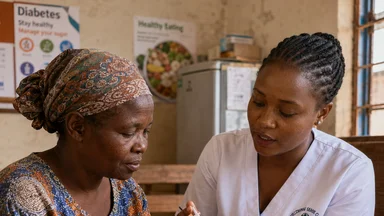
Even if point-of-care devices become available, someone must interpret the results. In Huye, diabetes care is often managed by nurses and community health workers, not physicians. Task-shifting is a cornerstone of Rwanda's health system, but it requires training. An HbA1c of 8% means different things depending on the patient's age, comorbidities, and treatment history. Nurses need clear algorithms to guide decisions.
Rwanda's mentorship program pairs district health centers with referral hospital specialists. A diabetes nurse from Huye may visit Kigali for quarterly training, or a specialist may travel to Huye for supervision. These interactions build capacity, but they are infrequent. Smartphone applications that provide decision support could fill gaps, but internet connectivity in Huye is patchy, and many health workers lack smartphones.
Interpretation also requires understanding the limitations of HbA1c. Conditions like anemia, hemoglobinopathies, and chronic kidney disease can affect the accuracy of the test. In Rwanda, where iron deficiency and sickle cell trait are common, clinicians must be aware of potential false readings. Training must cover these nuances, or the test may mislead rather than inform.
The human resource challenge is not unique to Huye. Across sub-Saharan Africa, the ratio of diabetes specialists to patients is minuscule. Task-shifting is the only viable path, but it must be supported by ongoing education and supervision. Without that, point-of-care devices risk becoming expensive paperweights.
One promising approach is the use of clinical decision support tools integrated into electronic health records. Rwanda has been rolling out an electronic medical record system in some districts. If HbA1c results—whether from the lab or a point-of-care device—are entered into the system, automated alerts could guide nurses. For example, a result above 9% could trigger a recommendation to refer to a physician or start insulin. However, the EMR system is not yet universal in Huye, and many clinics still rely on paper registers. Until digital infrastructure catches up, training and paper-based algorithms will remain essential.
Bridging the Six-Month Wait: Practical Steps
Several strategies could reduce the HbA1c testing gap in Huye. One approach is to prioritize testing for patients at highest risk: those on insulin, those with complications, and those with persistently elevated fasting glucose. A triage system could ensure that the limited number of tests reach those who need them most. This would not solve the problem for everyone, but it would target resources where they have the greatest impact.
Another strategy is to improve sample transport logistics. Pooled sample transport—where a single courier collects samples from multiple clinics on a fixed schedule—can reduce delays. Rwanda's central lab could implement a barcode tracking system to monitor sample flow and identify bottlenecks. Simple interventions, like providing additional coolers or backup batteries for refrigerators, could reduce sample rejection rates.
Negotiating bulk pricing for point-of-care cartridges through the African Union or the Global Fund could bring costs down. A pooled procurement mechanism for diabetes diagnostics, similar to what exists for HIV and malaria, could make devices affordable. Advocacy groups like the International Diabetes Federation have called for such mechanisms, but progress has been slow.
Integrating HbA1c testing into Rwanda's national non-communicable disease monitoring framework would signal political commitment. If the Ministry of Health sets a target for HbA1c coverage and allocates dedicated funding, district managers would have incentive to prioritize it. A similar approach has worked for HIV viral load testing, which is now routinely available even in rural areas. Diabetes deserves the same attention.
Community health workers could also play a role. In Rwanda, these workers are already trained to screen for hypertension and refer patients. With additional training, they could educate patients about the importance of HbA1c testing and help schedule appointments. They could also follow up on missed tests, ensuring that patients who need monitoring do not fall through the cracks. A 2020 pilot in the Northern Province showed that community health worker involvement increased HbA1c testing rates by roughly 40% over six months.
Without monitoring, metformin alone is a blind intervention. Patients like John N. and Marie A. will continue to develop complications that could have been prevented. The six-month wait for an HbA1c result is not an immutable fact of life in Huye—it is a solvable problem, provided the will and resources are marshaled. The biology of diabetes demands nothing less.
This article is for informational purposes only and does not constitute medical advice. Individuals with diabetes should consult a qualified healthcare provider for diagnosis and treatment.