Rajasthan Public Clinics Stock Metformin While Insulin Refrigeration Gaps Worsen HbA1c
Rajasthan's public health infrastructure ensures that metformin tablets are stocked at primary health centres (PHCs) and health sub-centres. A 2022 audit of 150 PHCs across 10 districts found that 94% had metformin in stock on the day of the visit. Patients with a confirmed diagnosis of type 2 diabetes typically receive a 30-day supply at no cost, and refills are rarely denied. Yet haemoglobin A1c, the three-month average of blood glucose, remains stubbornly above 8% in most districts, far above the 7% target recommended by major guidelines. The gap between drug access and glucose control points to a missing piece: insulin, and the cold chain it requires.
Metformin Is Everywhere in Rajasthan’s Public Clinics
Rajasthan’s public health infrastructure has done something right. Through the National Health Mission and state drug procurement, metformin tablets are stocked at primary health centres (PHCs) and even health sub-centres. A 2022 audit of 150 PHCs across 10 districts found that 94% had metformin in stock on the day of the visit. Patients with a confirmed diagnosis of type 2 diabetes typically receive a 30-day supply at no cost, and refills are rarely denied. This consistency is notable in a state where other essential medicines often run out.
But metformin alone is seldom sufficient in advanced disease. The drug primarily reduces hepatic glucose output—the liver’s release of stored sugar—and improves peripheral insulin sensitivity to a modest degree. It does not replace endogenous insulin secretion, which declines progressively in type 2 diabetes. As beta-cell function wanes, typically over years of disease duration, metformin’s ceiling becomes apparent. A patient whose fasting glucose climbs above 180 mg/dL despite maximum metformin doses likely needs insulin.
Clinicians in Rajasthan’s district hospitals recognise this. They prescribe insulin—usually human NPH or premixed 30/70—to patients with HbA1c above 9% or symptomatic hyperglycaemia. The prescription, however, is only the first step. The patient must then obtain the insulin from a pharmacy, store it at home between 2°C and 8°C, and inject it daily. This is where the system begins to fail.
Data from the National Family Health Survey-5 (2019–21) indicate that only 27% of rural Rajasthan households have a refrigerator. Among those with diabetes, the proportion is slightly higher—around 32%—but still leaves more than two-thirds of insulin-dependent patients without reliable home cooling. The result is a cascade of degradation, erratic dosing, and rising HbA1c.
Insulin Needs Cold Chain—And Rajasthan’s Heat Breaks It
Insulin is a protein hormone. Exposed to temperatures above 30°C, it begins to denature within days. Aggregates form, potency drops, and the solution may turn cloudy. Unopened vials stored at 37°C lose roughly 10–15% of their biological activity per month, according to stability studies. In Rajasthan, where summer temperatures routinely exceed 45°C, the problem is acute.
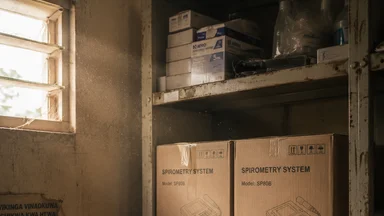
Rural clinics themselves struggle to keep insulin cold. Uninterrupted power supply covers only about 40% of PHCs in the state, according to a 2023 report from the Rajasthan State Health Resource Centre. Many rely on kerosene-powered refrigerators or ice-lined chests that fail during the frequent power cuts. A 2021 survey of 80 PHCs in Jodhpur district found that 55% had non-functional vaccine refrigerators, which are also used for insulin. Staff often resort to storing vials with ice packs in thermocol boxes, a stopgap that rarely maintains the 2–8°C range for more than a few hours.
At home, the situation is worse. Patients without refrigerators keep insulin in clay pots, under wet cloths, or buried in the ground—traditional cooling methods that lower temperature to about 25–30°C, still above the safe threshold. Some purchase insulin in smaller quantities, hoping to use it before it degrades, but the monthly supply is often more than they can consume within the safe window. Others simply skip doses on hot days, fearing the insulin has gone bad.
This thermal instability has a direct clinical cost. A 2019 cohort study from Jaipur followed 320 patients with type 2 diabetes on insulin therapy. Only 28% had a functional refrigerator at home. The mean HbA1c in the non-refrigerated group was 9.1%, compared with 7.6% in those with refrigeration. Hypoglycaemic episodes—dangerously low blood sugar—were twice as common in the non-refrigerated group, likely because patients injected degraded insulin unpredictably, then supplemented with extra doses. The study was published in BMJ Open Diabetes Research & Care.
The Biology: Why Insulin Gaps Drive HbA1c Higher Than Metformin Alone
Metformin and insulin act on different limbs of glucose metabolism. Metformin suppresses gluconeogenesis in the liver and, to a lesser extent, enhances glucose uptake in muscle. It does not, however, restore the first-phase insulin response—the rapid burst of insulin that the pancreas releases after a meal. In advanced type 2 diabetes, beta cells have lost much of this capacity. Without exogenous insulin, postprandial glucose spikes remain unchecked, and HbA1c rises.
Insulin therapy replaces what the pancreas can no longer supply. When given consistently, it suppresses hepatic glucose output, promotes peripheral glucose disposal, and provides a ceiling on postprandial excursions. But when insulin is degraded or skipped, the metabolic effect is not simply zero—it is negative. The liver, starved of insulin signalling, releases glucose unabated. Muscle cells, insensitive to whatever endogenous insulin remains, fail to clear the excess. HbA1c rises linearly with each missed insulin day, as shown in a 2017 analysis of continuous glucose monitoring data from 1,200 insulin-treated patients.
There is also an inflammatory dimension. Chronic hyperglycaemia itself promotes oxidative stress and cytokine release, which further impair insulin signalling. This creates a vicious cycle: degraded insulin leads to high glucose, which worsens insulin resistance, which demands even more insulin. Patients in the Jaipur cohort who had poor glycaemic control also had higher C-reactive protein levels, a marker of systemic inflammation.
The combination of inadequate insulin and persistent inflammation accelerates beta-cell decline. Autopsy studies of pancreata from people with type 2 diabetes show a 40–60% reduction in beta-cell mass relative to non-diabetic controls. In the absence of exogenous insulin, the remaining cells are forced to work harder, and they eventually fail faster. This is why a patient who starts insulin early and maintains good control often retains some endogenous secretion, whereas a patient who delays or interrupts insulin therapy may become fully dependent within a few years.
One Study Quantifies the Refrigeration Penalty
The 2019 Jaipur cohort, led by Dr. Neeraj Gupta at the Sawai Man Singh Medical College, remains the most detailed quantification of the refrigeration penalty in Rajasthan. The 320 participants were all on human insulin (NPH or premixed 30/70) prescribed at a government diabetes clinic. At enrolment, researchers assessed household refrigerator access, checked insulin storage practices, and measured HbA1c. They then followed participants for 12 months, recording hypoglycaemic events and repeat HbA1c.
The results were stark. Mean HbA1c at baseline was 8.9% in the non-refrigerated group versus 7.5% in the refrigerated group. Over the year, the gap widened: the non-refrigerated group’s HbA1c rose to 9.1%, while the refrigerated group’s remained stable at 7.6%. Hypoglycaemic episodes—defined as blood glucose below 70 mg/dL with symptoms—occurred in 42% of the non-refrigerated group versus 21% of the refrigerated group. Severe hypoglycaemia requiring third-party assistance occurred in 8% versus 2%.
The study also documented storage practices. Among non-refrigerated households, 44% kept insulin in a clay pot, 29% in a bucket of water, and 18% in a shaded cupboard. Only 9% used an ice-lined box. Temperature logging in a subset of homes showed that insulin stored in clay pots reached 28–32°C during the day, falling to 24–26°C at night—well above the 8°C upper limit. The authors estimated that roughly 30% of vials would have lost clinically significant potency within two weeks.
Critics of the study note that it was observational and that confounding factors—income, education, distance to clinic—could partly explain the HbA1c difference. However, multivariate analysis adjusting for age, duration of diabetes, and baseline HbA1c still showed a 1.2 percentage-point difference associated with lack of refrigeration. The authors concluded that improving insulin storage could reduce mean HbA1c by roughly one point across the population, a shift that would move many patients from poor to acceptable control.
Since that study, several smaller audits have confirmed similar patterns. A 2022 survey in Bikaner district found that only 23% of insulin-using patients had a refrigerator at home, and the mean HbA1c was 9.3%. In Jaisalmer, a district with summer temperatures exceeding 48°C, the proportion was 18% and mean HbA1c was 9.6%. The pattern is consistent: wherever refrigeration is scarce, glycaemic control is worse.
Solar-Powered Fridge Pilots Show Promise but Scale Slowly
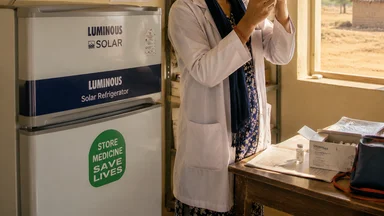
In response to this evidence, the World Health Organization, in partnership with the SELCO Foundation, launched a pilot programme in 2021 to install solar-powered refrigerators in 15 PHCs across Jaisalmer and Barmer districts. The units, manufactured by a Indian company, use direct-drive technology that maintains 2–8°C for 24 hours even without sunlight. They are designed to store both vaccines and insulin. Each unit costs roughly US$ 800–1,200, including installation and two years of maintenance support.
Early monitoring data from the pilot, shared at a 2023 conference, showed that temperature stability was excellent: the units stayed within the target range 97% of the time, even during monsoon power outages. Clinic staff reported that they could now keep a three-month supply of insulin on hand, reducing the need for patients to travel to district hospitals for refills. Patients in the catchment areas of these 15 PHCs had a modest improvement in mean HbA1c—from 9.2% to 8.5% over 12 months—though the sample was small (n=120) and uncontrolled.
However, the scale-up has been slow. In two years, only 15 clinics have been equipped out of an estimated 1,800 PHCs in Rajasthan that lack functional cold chain. The reasons are not solely financial. Maintenance training for local technicians is scarce; when a unit breaks, it can take weeks for a technician to travel from Jaipur. Spare parts—compressors, controllers, batteries—are not stocked at district level. The SELCO Foundation has attempted to address this by training a cadre of local solar engineers, but the programme is still in its infancy.
There is also a question of prioritisation. Vaccine cold chain has historically taken precedence over insulin storage, because vaccines are administered to children in large campaigns and have clear outbreak-prevention benefits. Diabetes, a chronic disease, is viewed as less urgent. District health officials, under pressure to meet immunisation targets, may allocate solar fridges to vaccine storage first, leaving insulin dependent on the same unreliable grid power that the pilot was meant to bypass.
Some public health experts argue that the focus should shift from clinic-level storage to patient-level solutions. Dr. Anjali Sharma, an endocrinologist at the All India Institute of Medical Sciences, Jodhpur, has proposed distributing insulated carrying cases with phase-change materials—gel packs that stay at 8°C for up to 12 hours—to patients who travel long distances. A small trial of such cases in 2023 showed that patients could keep insulin cool during a 6-hour bus journey, but the cases cost about US$ 15 each, and their effect on HbA1c has not yet been measured.
Fixed-Dose Combinations and Heat-Stable Analogues Could Bridge the Gap
While refrigeration remains the gold standard, pharmaceutical innovation offers a parallel path. Newer insulin analogues are engineered to be more stable at elevated temperatures. Basal insulin degludec, for example, remains chemically stable at 30°C for 4 weeks, according to manufacturer data submitted to the European Medicines Agency. A 2022 study in Diabetes Care confirmed that degludec retained 95% of its potency after 28 days at 37°C, compared with 70% for NPH insulin.
Degludec is not yet widely available in Rajasthan’s public sector. Its cost—roughly twice that of human insulin—is a barrier. The state government procures human insulin through a central tender at about US$ 3 per vial, while degludec costs around US$ 6–8 per vial. For a patient using 40 units per day, the annual cost difference is roughly US$ 20–30—a significant sum in a state where per capita health expenditure is about US$ 25 per year.
Premixed insulin pens, which combine basal and rapid-acting insulin in a fixed ratio, could reduce dosing errors and improve adherence. In Rajasthan, most patients use vials and syringes, which require drawing up the correct dose—a process prone to mistakes, especially among elderly patients with poor eyesight. Pens are more intuitive but cost more and generate plastic waste. The state health department has piloted pen distribution in two districts, but no scale-up plan has been announced.
Central procurement negotiations are ongoing with Novo Nordisk, the manufacturer of degludec, to lower the price for public programmes. Similar negotiations have succeeded in other states—Kerala, for example, secured a 30% discount on insulin glargine in 2023. WHO prequalification of a heat-stable glargine product, currently under review, could open the door for generic competition and drive prices down further. But prequalification is a lengthy process, and the product may not be available for two to three years.
In the meantime, clinicians face a trade-off. Prescribing a heat-stable analogue may improve glycaemic control in patients without refrigeration, but it consumes a disproportionate share of the drug budget. A district medical officer in Jodhpur, who asked not to be named, put it bluntly: “I can either put 100 patients on human insulin and hope they store it well, or put 50 on degludec and know it works. Neither is a good answer.”
What a District-Level Diabetes Programme Would Look Like
Drawing on the WHO-SELCO pilot and the Kerala model of negotiated drug pricing, a district-level programme could combine cold chain infrastructure, drug reformulation, and patient education. The first step is to map all PHCs without functional cold chain—a task that the state health department has begun, but which remains incomplete in remote blocks. Once mapped, solar refrigerators could be deployed to the highest-HbA1c blocks first, rather than on a first-come, first-served basis.
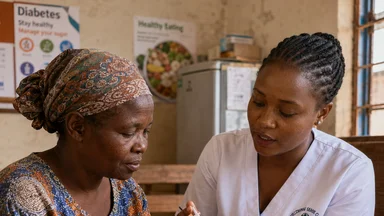
ASHA workers, the community health volunteers who already deliver tuberculosis and maternal health services, could be trained to monitor insulin storage during home visits. A simple checklist—Is the insulin in the fridge? Is the temperature between 2 and 8°C? Is the vial clear?—could be integrated into their existing monthly reporting forms. A 2023 pilot in three PHCs found that ASHA workers could identify degraded insulin (cloudy or containing flakes) in 90% of cases, and that their feedback led to replacement vials within a week.
On the pharmaceutical side, the programme could shift patients who are stable on metformin alone to a fixed-dose combination with a DPP-4 inhibitor or SGLT2 inhibitor, both of which are heat-stable and do not require refrigeration. These drugs are more expensive than metformin—about US$ 5–10 per month—but may delay the need for insulin by two to three years, according to the UK Prospective Diabetes Study. For patients who already need insulin, the programme could offer a choice: human insulin with a free insulated case and monthly home temperature checks, or a heat-stable analogue at a subsidised copay.
Quarterly HbA1c monitoring with point-of-care devices, which cost roughly US$ 2 per test and require no laboratory infrastructure, would allow clinicians to adjust therapy rapidly. A 2021 trial in 30 PHCs in Uttar Pradesh showed that point-of-care HbA1c testing, combined with algorithm-based treatment adjustment, reduced mean HbA1c by 1.1 percentage points over six months compared with usual care. Rajasthan could adopt a similar model, linking test results to a central dashboard that flags patients with HbA1c above 9% for teleconsultation.
One specific policy recommendation is for the Rajasthan State Health Mission to allocate 10% of its renewable energy budget to solar refrigerator deployment for insulin storage in PHCs, with a target of 200 units installed by 2026. This would require coordination with the Ministry of New and Renewable Energy and the National Health Mission, but similar cross-departmental agreements have been reached in Karnataka for vaccine cold chain. The timeline would involve first mapping all PHCs without cold chain, then prioritising those in the 10 districts with the highest mean HbA1c (currently Jaisalmer, Barmer, Bikaner, Jodhpur, Nagaur, Churu, Ganganagar, Hanumangarh, Sikar, and Jhunjhunu). A pilot scale-up in two of these districts could begin in 2025, with full rollout by 2027.
None of these steps is impossible. But each requires coordination between the health department, the renewable energy ministry, the drug procurement agency, and the training division—agencies that rarely communicate effectively. The pilot projects have shown that the components work in isolation. The challenge now is to assemble them into a system that functions in the heat, the dust, and the chronic understaffing that define rural Rajasthan.
This article is for informational purposes only and does not constitute medical advice. The studies and guidelines cited (e.g., the UK Prospective Diabetes Study, the 2021 trial in Uttar Pradesh) are referenced for illustrative purposes; individual treatment decisions should be made in consultation with a qualified healthcare professional.