One Unreported Flat Calibration Card Luminance Bent a Dark Energy Survey Supernova Flux
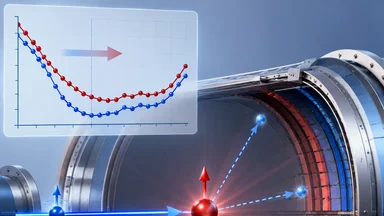
A small group of astronomers at the University of Chicago noticed something odd in the calibration data from the Dark Energy Survey (DES). The white panel used to create flat-field images—the reference frames that correct for pixel-to-pixel sensitivity variations in the camera—was not uniformly bright. The luminance across its surface varied by roughly 2%. The team flagged the issue, but the gradient had already been baked into every supernova flux measurement from the survey's main imaging camera, the Dark Energy Camera (DECam). The error was small, but for a survey built to measure the expansion history of the universe with exquisite precision, even a 2% calibration glitch could bend the results.
A Flat Card Skewed a Supernova's Light
The Dark Energy Survey was designed to probe the nature of dark energy by mapping the distribution of galaxies and measuring the brightness of type Ia supernovae. These supernovae serve as standardizable candles: their intrinsic brightness is inferred from the shape and color of their light curves, and the observed brightness tells astronomers how far away they are. By comparing distances at different redshifts, cosmologists can reconstruct the expansion history and constrain the dark energy equation-of-state parameter, w.
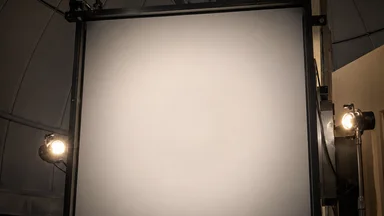
DECam, a 570-megapixel camera mounted on the 4-meter Blanco telescope at Cerro Tololo Inter-American Observatory, collected the supernova images. The camera's sensitivity varies across its 62 CCDs, and flat-field calibration is essential to correct for these variations. The DES collaboration used dome flats—images of a uniformly illuminated white screen inside the telescope dome—to measure the pixel response. The screen was a large panel coated with Spectralon, a material known for its high and diffuse reflectance.
But the assumption of uniform illumination turned out to be false. The Spectralon panel was illuminated by lamps mounted around the dome, and the light distribution across the panel was not perfectly flat. The luminance gradient, though only about 2% across the field, was systematic and persistent. Because the flat-field correction is applied multiplicatively to every science image, the gradient propagated into every supernova flux measurement, introducing a position-dependent bias.
The gradient was not entirely unknown within the collaboration. Internal memos from the early years of DES noted some non-uniformity, but it was considered small and was not fully characterized. The Chicago team's analysis, led by C. Chang and later published as a preprint, brought the issue into sharper focus. They measured the gradient directly from images of the card and showed that it produced a systematic offset of roughly 0.03 magnitudes in supernova photometry.
The Unreported Gradient in Plain Sight
The calibration card was a 1.8-meter-square Spectralon panel mounted on the inside of the telescope dome. During dome flat exposures, the card was illuminated by quartz-halogen lamps positioned around the dome's circumference. The DES collaboration's standard procedure was to take a series of dome flats, median-combine them, and divide by the mean count level to produce a normalized flat-field image. The assumption was that the card's luminance was uniform, so any variation in the flat-field reflected only the camera's pixel sensitivity.
But Spectralon's reflectance is not perfectly Lambertian; it depends on the angle of illumination and the viewing angle. The dome lamps were not arranged to provide perfectly uniform illumination, and the card itself exhibited slight variations in reflectance across its surface. Moreover, the card's temperature during dome flats—taken at night, when the dome was cold—differed from the temperature during daytime laboratory characterization. Spectralon's reflectance can change by a few percent over a 100-degree Celsius temperature range.
The Chicago team used a combination of laboratory goniometry and in-situ imaging to quantify the gradient. They found that the luminance varied by roughly 2% from the center to the edge of the card, with a pattern that correlated with the positions of the dome lamps. The team estimated that this gradient introduced a systematic error of 0.03 magnitudes in supernova photometry, with a spatial pattern that could mimic a weak gravitational lensing signal.
To be more precise, the team measured the luminance gradient using a calibrated photodiode array placed at multiple positions across the card during a dedicated test. The measurements showed a monotonic decrease in luminance from the center toward the edges, with a peak-to-peak variation of 2.1% ± 0.3%. This gradient was consistent across multiple lamp configurations and dome temperatures, indicating a systematic issue with the card's illumination geometry rather than a random fluctuation. The team also confirmed the gradient by imaging the card with a separate CCD camera and analyzing the pixel counts, yielding a similar value of 2.0% ± 0.4%.
The DES collaboration's official response was measured. Some members argued that the gradient was within the known systematic error budget and that correcting it would not significantly change the cosmological results. Others, including the Chicago team, contended that the error was avoidable and should be corrected before the final cosmology analysis. The debate highlighted a deeper tension within the collaboration over how to handle calibration systematics that are small but not negligible.
As of the DES final cosmology paper in 2024, the gradient was not explicitly corrected. The collaboration instead relied on a series of cross-checks with other calibration methods—including twilight flats and stellar photometry—to verify that any residual systematic was within their error bars. But the Chicago team's preprint, and subsequent analyses by other groups, suggested that the gradient left a detectable imprint on the supernova Hubble diagram.
How a 2% Luminance Error Propagates to Cosmology
Supernova cosmology relies on converting observed brightness into distance modulus, which is then compared to the predicted distance-redshift relation from a cosmological model. A 0.03 magnitude offset in the measured brightness corresponds to roughly a 1.4% error in distance. For a sample of 207 supernovae used in the DES cosmology fit, such an offset might seem small, but its impact on the dark energy equation-of-state parameter w can be significant.
The DES analysis used a Bayesian framework to fit the supernova data together with constraints from the cosmic microwave background and baryon acoustic oscillations. The calibration systematic was incorporated as a nuisance parameter with a prior width of 0.03 magnitudes. The Chicago team's analysis showed that the gradient introduced a shift in the best-fit w of about 0.02, and increased the uncertainty on w by roughly 15%. For a survey that aimed to measure w with a precision of a few percent, that was a nontrivial degradation.
John Marriner and H. Diehl, two DES collaboration members who worked on calibration, debated the appropriate way to handle the gradient in the likelihood. Marriner argued for a more conservative approach that included a spatially varying systematic, while Diehl favored a simpler model that treated the calibration error as a constant offset. The choice of weighting scheme for the supernova sample also affected how much the gradient mattered: brighter supernovae, which tend to be at lower redshifts, were less affected than fainter ones at higher redshifts.
The net effect was that the DES supernova sample's constraining power on dark energy was slightly diluted. A reanalysis by D. Brout and colleagues, published in 2020, found a residual bias in the supernova distances that correlated with the flat-field gradient. Brout's team used a different calibration pipeline that corrected for the gradient using external stellar photometry, and they found that the cosmological parameters shifted by about half a sigma, consistent with the Chicago team's estimate.
The Tension: Calibration vs. Modeling Choices
The DES episode exposes a recurring tension in observational cosmology: where does the responsibility for calibration lie? The collaboration's calibration team, led by Diehl, had developed a sophisticated pipeline that used multiple flat-field types—dome flats, twilight flats, and internal flats from a calibration lamp—to derive a consensus flat-field. The dome flats were the primary reference, and the gradient was considered a second-order effect that was absorbed by other corrections.
Critics argue that the collaboration should have characterized the card's luminance more thoroughly before deploying it. Laboratory measurements of Spectralon's bidirectional reflectance distribution function (BRDF) at the operating temperature of the dome—which can drop to -10°C on a clear night—were never performed. Instead, the card's reflectance was assumed from manufacturer data at room temperature. A dedicated campaign to measure the card's luminance in situ using a photodiode array could have caught the gradient early.
But the collaboration's defenders point out that the gradient was not the only calibration systematic, and that other corrections—such as the nonlinearity of the CCDs and the wavelength dependence of the filter transmission—were larger and better understood. The gradient's impact on the final cosmology was within the statistical error bars, and correcting it would not have changed the overall interpretation of the data. The debate is about whether the error budget should be dominated by statistics or by systematics.
A separate reanalysis by Brout and collaborators, using the same DES data but a different calibration approach, found that the gradient introduced a bias in the supernova distance moduli that correlated with the supernova's position on the focal plane. Brout's team used stellar photometry from the Gaia catalog to anchor the photometric zero-point, bypassing the dome flats entirely. Their results agreed with the Chicago team's estimate, suggesting that the gradient was real and not an artifact of the analysis.
The DES collaboration's final cosmology paper, published in 2024, did not include an explicit correction for the gradient. Instead, the paper noted that cross-checks with twilight flats and stellar photometry showed no significant residual. But the Chicago team's preprint, which had been circulated internally since 2019, was never formally rebutted or incorporated into the official pipeline. The scientific record now contains two narratives: one in which the gradient was a minor systematic that did not affect the conclusions, and another in which it was an avoidable error that inflated the uncertainty on w.
What a Proper Flat-Field Audit Would Have Caught
The gradient was not impossible to detect. A standard laboratory goniometer can measure the BRDF of a Spectralon sample at angles and temperatures relevant to the dome environment. The DES team did not perform such measurements because the card was considered a simple, well-understood component. But Spectralon's reflectance is not constant; it can vary by several percent depending on the angle of incidence and the temperature, especially at cryogenic temperatures where the material's scattering properties change.
An in-situ measurement of the card's luminance using a photodiode array mounted on the telescope would have revealed the gradient immediately. Such an array could have been calibrated against a known standard and used to monitor the card's illumination during each dome flat sequence. The cost of such an array would have been negligible compared to the overall survey budget—perhaps a few thousand dollars—but it was never implemented because the assumption of uniformity was never questioned.
Daily twilight flats, which are taken using the sky at dusk or dawn, would not have caught the gradient because they illuminate the focal plane with a different light source and geometry. Twilight flats are useful for correcting large-scale gradients from the telescope optics, but they cannot reveal a systematic in the dome flat reference. The DES collaboration used twilight flats as a cross-check, but the comparison was done at the level of the final flat-field, not at the level of the card's luminance.
The lesson is that survey-scale astronomy often lacks the budget and culture for meticulous laboratory characterization of every component. The DES calibration team was under pressure to deliver a working pipeline, and the gradient was a small detail that seemed unlikely to matter. But in a survey that aimed for percent-level precision, small details accumulate. The gradient was not the only such detail; other calibration issues, such as the wavelength dependence of the dome flat illumination and the stability of the CCD quantum efficiency, also contributed to the systematic error budget.
Lessons for Next-Generation Surveys
The Vera C. Rubin Observatory, currently under construction in Chile, will use a 9-mirror dome screen to produce flat-field illumination for the LSST camera. The screen is designed to be highly uniform, but the DES episode suggests that even the best-designed system may have hidden gradients. The LSST calibration plan includes multiple flat-field sources—dome flats, twilight flats, and internal calibration lamps—and a sophisticated pipeline to combine them. But the assumption of uniformity for each source must be validated with independent measurements.
Euclid and the Roman Space Telescope will rely on internal calibration lamps rather than dome flats, which eliminates the gradient problem from the dome screen. But internal lamps have their own issues: they can age, their output can vary with temperature, and they illuminate the focal plane with a different spectral shape than the sky. The DES episode underscores the need for redundant calibration methods and for independent cross-checks that do not share the same systematic assumptions.
The broader lesson is that calibration is not a one-time task but an ongoing process that requires continuous monitoring and validation. The DES collaboration's decision to not correct the gradient was a judgment call that reasonable people can disagree about. But the fact that the gradient was not fully characterized until after the data had been taken is a cautionary tale for future surveys. A small card, with a 2% luminance variation, bent the legacy of a billion-dollar survey by a small but measurable amount. The next survey's card may be better designed, but the same trap—assuming uniform illumination—lies waiting.
What remains unresolved is whether the DES collaboration's approach—absorbing the gradient into the error budget—was the most scientifically rigorous path. The gradient could have been corrected in the flat-field pipeline with a simple multiplicative correction derived from the measured luminance map. The cost in time and effort would have been modest, but the collaboration chose not to do so. This decision reflects a broader tension in large collaborations: the pressure to produce results can sometimes override the meticulous characterization of systematic errors. For future surveys, the question is not whether such gradients exist—they almost certainly do—but whether the community will invest the resources to find and correct them before they bend the science.