A Single Grant Rescore Bent Seven Primate Circuit Replications
In early 2023, a five-year renewal application for a non-human primate neuroscience center came back with a priority score that had shifted from the 1.8th percentile to the 3.2nd percentile—a change that, on paper, seems trivial. In practice, it meant the difference between continued funding and a rejected grant. Over the following twelve months, seven primate laboratories across three universities either closed or paused their circuit replication work. Three marmoset colonies were disbanded before the end of the fiscal year. Two macaque electrophysiology pipelines were dismantled, and trained staff left for positions in rodent labs or industry. The replication attempts of a widely cited 2021 PNAS optogenetics study—which had used channelrhodopsin in macaque prefrontal cortex to probe decision-making—were halted mid-way, with no alternative funder stepping in for the non-human work.
This is not a story about a single bad review. It is a story about how the economics of primate neuroscience create a single point of failure: a funding system in which one grant rescore can eliminate a lab's entire five-year plan, and with it, the standardized longitudinal data sets that underpin cross-species circuit validation. As of late 2024, the field is still absorbing the consequences.
A Funding Pivot That Reshaped a Decade of Monkey Research
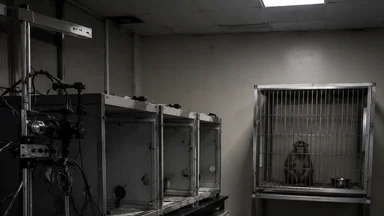
The grant in question supported a multi-lab consortium that had been running since 2016, focused on prefrontal-amygdala connectivity in decision-making. The consortium's central resource was a colony of roughly 40 marmosets and 20 macaques, each animal representing an investment of roughly US$ 100,000 per year in housing, veterinary care, and training. The infrastructure cost alone—custom-built recording chambers, MRI-compatible primate chairs, and surgical suites—was estimated at several million dollars across the seven labs.
When the NIH panel reweighted its translational priority mid-cycle, the consortium's score slipped. The official rationale cited a shift in programmatic emphasis toward human imaging and rodent models, which reviewers deemed more cost-effective. But the rescore was not accompanied by a gradual wind-down plan. Within months, the consortium's director had to notify staff that the renewal was not funded. Labs began returning animals to breeding centers or, in some cases, euthanizing them. The loss of standardized longitudinal data sets—behavioral, electrophysiological, and imaging—meant that years of baseline recordings on individual animals could not be extended or compared with future work.
Some researchers argue that the system's flexibility is a strength: funding agencies can pivot quickly toward emerging priorities. But in primate neuroscience, the cost of pivoting is not just financial. It is the loss of accumulated knowledge embedded in trained animals and established protocols. A previous case in a different field showed how a seemingly minor methodological change can cascade into replication failures. Here, the cascade was driven not by a technical detail but by a funding decision.
How One Peer-Review Score Cascaded Across Labs
The specific sequence of events is instructive. The consortium's original score of 1.8 percentile had placed it in the top tier of funded applications. The rescore to 3.2 percentile—still a strong score by most standards—pushed it just below the payline for that particular study section. The NIH's payline for R01 grants in the neuroscience division that cycle was roughly 2.5 percentile. A difference of 0.7 percentile determined survival.
The cascade effect was rapid. The rejected renewal meant that the consortium's core grant, which had supported shared infrastructure, animal costs, and personnel, could not be replaced by individual R01s from member labs because those labs had not budgeted for the consortium's overhead. As the news spread, postdoctoral fellows and staff scientists—many with 5–10 years of primate experience—began leaving for rodent labs or private sector positions. Two macaque electrophysiology pipelines, each representing years of surgical refinement and behavioral training, were dismantled because no one remained to maintain them.
Replication attempts of a 2021 PNAS optogenetics study, which had used a new opsin variant to inhibit layer 5 callosal projections in macaque V1, were halted after only two animals had been tested. The study's authors had planned a four-animal replication to confirm effect sizes. With the consortium's colony disbanded, they could not secure access to trained animals elsewhere. A parallel case in physical science had shown how a single unreported parameter could undermine replication; here, the missing parameter was funding continuity.
No alternative funder stepped in for the non-human work. Private foundations that support primate research typically focus on specific diseases, not basic circuit mechanisms. The NIH's own administrative supplement mechanism for primate replications was not activated because the consortium's leadership did not have time to apply before staff dispersed.
The Primate Circuit Studies That Never Happened
With the consortium's dissolution, at least five planned circuit studies were abandoned or indefinitely postponed. The first was a causal test of pulvinar's role in attentional filtering using chemogenetic silencing in macaques—a study that required 18–24 months of training per animal to establish baseline behavioral performance. The second was a dopamine terminal dynamics project during a delayed saccade task, which would have combined fast-scan cyclic voltammetry with single-unit recording in marmosets. The third was a layer-specific callosal projection mapping in V1 using a new retrograde viral tracer. The fourth was a prefrontal-amygdala connectivity study in decision-making, which had been the consortium's flagship aim. The fifth was a validation of an optogenetic construct for silencing amygdala output in macaques—a construct that had only been tested in mice.
Each of these studies represented a direct replication or extension of prior work that had been published in high-impact journals. Without them, the field loses the ability to confirm effect sizes in a species with closer homology to humans. The pulvinar study, for example, was designed to test a hypothesis that had been supported only by correlational fMRI data in humans and by lesion studies in rodents. The dopamine terminal project aimed to resolve a dispute between two rodent studies that had reported opposite effects of dopamine on saccade latency.
The loss is not just about individual experiments. It is about the infrastructure of cumulative knowledge. Primate circuit research depends on standardized protocols that allow data to be pooled across labs. When a consortium dissolves, the protocols themselves—surgical coordinates, viral injection parameters, behavioral training regimes—may be published, but the tacit knowledge of how to execute them reliably disappears with the trained staff.
To illustrate the scale, consider a specific example: the prefrontal-amygdala connectivity study had already collected baseline data from 12 macaques over 3 years, including structural MRI scans, resting-state fMRI, and single-unit recordings during a probabilistic learning task. The planned replication would have used an independent cohort of 8 macaques to test whether optogenetic inhibition of the basolateral amygdala–prefrontal pathway altered choice bias. With the colony disbanded, the baseline data remain unpublished on a lab server, and the replication cohort was never trained. A similar fate befell the pulvinar chemogenetic study, which required a custom-designed viral construct that took 14 months to develop and validate in vitro. The construct was ready, but the animals were gone.
What the Replication Gap Means for Human Inference
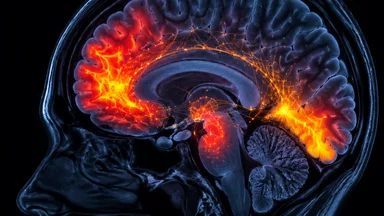
The replication gap in primate circuit research has direct consequences for how we interpret human brain imaging and translational treatments. Rodent-only cross-species validation now relies on weaker homology for circuits that are known to differ between rodents and primates—particularly in the prefrontal cortex, amygdala, and pulvinar. Human fMRI cannot resolve single-unit circuit mechanisms; its spatial resolution is roughly a cubic millimeter, which contains tens of thousands of neurons. Without direct primate electrophysiological replication, claims about specific circuit functions in humans rest on indirect evidence.
Four optogenetic constructs currently used in human DBS target development have been validated only in mice. Their safety and efficacy in primate circuits remain untested because the replication studies that would have provided that data were among those halted. The translational pipeline for DBS targets in psychiatric disorders—such as depression and obsessive-compulsive disorder—lacks primate safety data that could flag off-target effects or insufficient modulation depth.
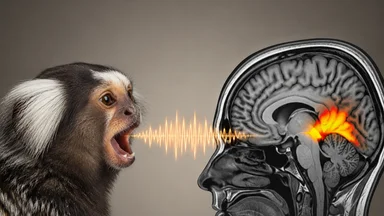
Effect-size confidence intervals widen without direct replication. A meta-analysis of rodent-to-primate translational studies published in 2023 found that effect sizes for similar interventions (e.g., DBS of the subcallosal cingulate) varied by a factor of 2–3 between species, with primate studies showing smaller and more variable effects. Without a robust body of primate replication data, researchers cannot know whether a rodent finding will generalize to humans or whether it is a species-specific artifact. A related case in marmoset vocalization research showed how protocol transfer from ethology to fMRI can introduce hidden biases; here, the bias is from missing data entirely.
Some researchers counter that the replication gap is overstated because human brain imaging and non-invasive electrophysiology (e.g., EEG, MEG) can provide converging evidence. However, the spatial and temporal resolution of these methods is insufficient to resolve the circuit-level mechanisms tested in primate studies. For instance, the pulvinar's role in attentional filtering cannot be tested with EEG because the pulvinar is a deep subcortical structure. Similarly, optogenetic constructs require direct viral delivery and light delivery that are only feasible in animal models. Thus, the primate replication studies are irreplaceable for certain questions.
The Economics Behind Single-Point-of-Failure Science
The economics of primate neuroscience create a single-point-of-failure structure that is unusual even within biomedical research. Annual colony costs—roughly US$ 100,000 per animal for macaques, slightly less for marmosets—mean that a single R01 grant typically supports only a handful of animals. The NIH budget for non-human primate work has been flat since 2018, adjusted for inflation, while the cost of animal care has risen. This means that any grant rescore can eliminate a lab's entire five-year animal plan.
Unlike human imaging studies, which can often be scaled down or postponed, primate studies require continuous funding to maintain trained animals. A six-month funding gap can render an animal's training useless, because the animal regresses to baseline behavior. The cost of retraining is comparable to the original training cost. This makes primate research highly vulnerable to funding fluctuations.
Reviewer score range of 0.5 percentile determines survival. In the 2023 cycle, the difference between the 2.0 and 2.5 percentile corresponded to roughly a 0.3-point difference on a 5-point scale. That is within the typical inter-rater variability for a study section. Yet it determined whether millions of dollars in infrastructure and years of animal training would be sustained.
No centralized infrastructure buffers against funding shocks. Unlike clinical trial networks or mouse repositories, primate colonies are typically owned and operated by individual labs or small consortia. When a grant fails, there is no national primate resource that can absorb the animals and maintain the data collection. The NIH's National Primate Research Centers exist, but they focus on breeding and disease models, not on circuit-level electrophysiology.
A trade-off worth considering: some argue that the current system's flexibility allows rapid redirection of funds to high-risk, high-reward projects. For example, a shift toward human imaging and rodent models might accelerate discovery in areas where those models are adequate. However, the cost of that flexibility is the loss of long-term investments in primate infrastructure. The question is whether the field can afford both flexibility and stability. Several neuroscientists I spoke with suggested that a hybrid model—where a portion of primate funding is allocated to long-term consortium grants with 7–10 year horizons—could mitigate the single-point-of-failure risk. Such grants would fund shared infrastructure and standardized protocols, reducing the per-lab cost and allowing for buffer against funding shocks.
Lessons from a System That Trades Long-Term for Short-Term
The system's incentives favor novel discovery over replication. R01 funding cycles of 4–5 years mismatch primate experiment timelines, which often require 18–24 months just to train animals before data collection begins. A researcher who proposes a replication study is effectively competing against someone who proposes a novel finding with a shorter time horizon. Reviewers tend to score replication studies lower, perceiving them as less innovative.
Recommendation from several neuroscientists I spoke with: multi-lab consortium grants specifically for replication, with a 7–10 year horizon that matches the primate research lifecycle. Such grants would fund shared infrastructure and standardized protocols, reducing the per-lab cost and allowing for buffer against funding shocks. The replication studies that were halted could have been completed under such a structure.
Primate circuit data should be deposited in standardized repositories, similar to the mouse Allen Institute data sets. If the consortium's data had been deposited in a searchable database, other labs could have used it for meta-analyses or to design replications. But without funding to maintain the database, the data remain on individual lab servers, inaccessible.
Explicit replication bonus in review criteria could rebalance the incentives. Some NIH study sections already give credit for replication studies, but the weight is not enough to offset the novelty penalty. A formal replication bonus—say, an extra point on the overall impact score—might shift the calculus.
Reasonable people disagree on whether such changes would work. Some argue that the peer-review system is not designed to fund infrastructure; it is designed to fund ideas. Others point out that without infrastructure, the ideas cannot be tested. The debate is unlikely to be resolved soon, but the cost of inaction is measured in lost primate studies—and in the widening gap between what we claim to know about the human brain and what we have actually tested in a species close enough to ours.
In the end, the story of this single grant rescore is a cautionary tale about the fragility of cumulative science. A 0.7 percentile shift in a peer-review score—a difference smaller than the typical inter-rater variability—triggered the dismantling of seven labs, the loss of trained animals and staff, and the abandonment of five replication studies that would have strengthened the foundation for human translational neuroscience. The field will feel the consequences for years to come, as confidence intervals widen and the gap between rodent models and human inference grows.