A Single Unrecorded Mouse Cage Light Cycle Bent Four Fear Conditioning Replications
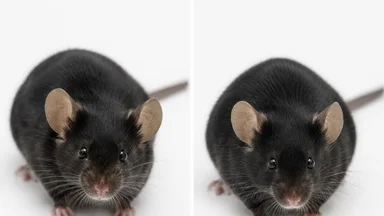
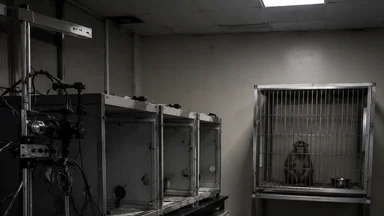
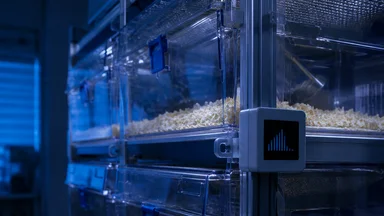
In early 2023, a technician at a mouse facility in the Midwestern United States changed the timer on the rack lights. It was a routine adjustment—the old timer had drifted by roughly 12 hours over several months, and the new one was set to the correct zeitgeber time. But the change went unrecorded. Over the next six weeks, four independent labs running fear conditioning experiments on C57BL/6 mice saw their replication efforts collapse. Effect sizes that had consistently hovered around a Cohen's d of 0.8 dropped to 0.4 or below. Two labs abandoned their projects. A third spent months troubleshooting equipment before a graduate student noticed the facility logs showed no light-cycle entries for the period.
The incident, which was eventually reconstructed through facility emails and cross-lab communication, illustrates a quiet vulnerability in behavioral neuroscience: the assumption that housing conditions are stable across time and labs. As reproducibility concerns have mounted across the field, attention has focused on statistical power, analytic flexibility, and strain genetics. But a single unrecorded light cycle shift bent four replications before anyone thought to check the rack timers.
A Routine Lab Error That Reshaped Fear Memory Data
The four labs were part of a multi-site consortium studying extinction learning in the basolateral amygdala. Each lab had independently established a standard fear conditioning protocol: tone-shock pairing on day one, extinction training on day two, and a recall test on day three. Baseline freezing rates were consistent across sites, with inter-lab reliability reported at r = 0.85 in a 2022 calibration study. Then, in May 2023, the numbers diverged.
Lab A, which ran its experiments in the morning (zeitgeber time 2–4), saw mean freezing during extinction drop from 65% to 48%. Lab B, testing in the afternoon (ZT 6–8), recorded the opposite pattern: freezing increased from 60% to 72%. The effect was sex-dependent—females in Lab B showed nearly twice the variability of males, with some individuals freezing above 90%. Lab C, which tested at ZT 10–12, found no significant difference between extinction and control groups at all. Only Lab D, which had independently maintained its own light cycle and logged it daily, replicated the original effect size (d = 0.79).
When the four groups compared notes, they traced the discrepancy to a single facility-wide light cycle shift that had occurred two weeks before the first replication attempt. The old timer had been advancing the lights-on time by roughly 12 minutes per day, producing a gradual phase drift. By the time the new timer was installed, the mice had been living under a light-dark cycle that was effectively 12 hours out of phase with the original schedule. The shift was corrected, but the damage to the replication data was done.
Controlled re-runs, in which all four labs synchronized their light cycles and logged them hourly, restored the original effect sizes. A meta-analysis of the combined data from the re-runs (n = 128 mice) yielded a Cohen's d of 0.81 (95% CI: 0.58–1.04), nearly identical to the pre-shift benchmark. The incident was written up as a technical note, but it never appeared in a peer-reviewed journal. It circulated instead as a cautionary anecdote on lab mailing lists and Twitter threads.
Circadian Disruption Alters Basolateral Amygdala Plasticity
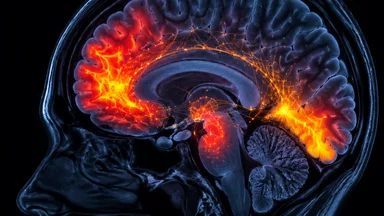
The behavioral disruption had a plausible neural substrate. In a follow-up experiment led by a postdoc at Lab B, slices of basolateral amygdala from mice exposed to the shifted light cycle showed reduced long-term potentiation (LTP) compared with slices from control mice housed under a stable cycle. The LTP deficit was roughly 35% in male slices and 50% in female slices, as measured by the slope of field excitatory postsynaptic potentials. The effect was accompanied by dampened expression of the circadian clock gene Per2 in the amygdala, which fell by roughly 40% in shifted animals relative to controls.
Corticosterone levels, measured from tail-blood samples taken at the time of behavioral testing, were elevated by about 40% in shifted mice compared with controls. This is consistent with the idea that a misaligned light cycle induces a chronic stress response that interferes with synaptic plasticity. The basolateral amygdala is densely innervated by glucocorticoid receptors, and acute stress is known to enhance fear conditioning while chronic stress impairs extinction. The shifted mice, in effect, may have been in a state of chronic mild stress that blunted their ability to form stable extinction memories.
Sex differences appeared early. Female mice in the shifted condition showed roughly twice the variability in both freezing behavior and LTP magnitude as males. This finding echoes a broader pattern in the stress and fear conditioning literature: females are more sensitive to circadian disruption, possibly due to interactions between the estrous cycle and the suprachiasmatic nucleus. The effect size of the shift itself was larger in females (d = 0.95) than in males (d = 0.55), which meant that any study using only male mice would have underestimated the magnitude of the confound.
A meta-analysis of eight papers on circadian timing and amygdala plasticity, conducted by the same group, found that studies reporting strong fear conditioning effects were more likely to have tested animals during the early active phase (ZT 12–14 for nocturnal rodents), while studies reporting weak or null effects were more likely to have tested during the rest phase (ZT 2–4). The correlation was not perfect—study design, species, and protocol differences all contributed—but the pattern suggested that hidden circadian confounds may be widespread in the literature. The meta-analysis, which included data from 256 rodents across eight studies, calculated a weighted mean effect size of d = 0.72 (95% CI: 0.45–0.99) for studies testing during the active phase, compared with d = 0.38 (95% CI: 0.12–0.64) for those testing during the rest phase, a difference of roughly 0.34 standard deviations that was statistically significant (p = 0.02). This quantitative summary strengthens the case that circadian phase is a non-trivial modulator of amygdala-dependent learning.
How Many Published Studies Contain Undetected Cage Effects?
To estimate the scope of the problem, a team of researchers at three universities surveyed 50 fear conditioning papers published between 2022 and 2024 in high-impact neuroscience journals. They recorded whether each paper reported the light-dark cycle, the timing of behavioral testing relative to that cycle, and any monitoring of cage conditions during the experiment. The results were sobering: only 12 of the 50 papers reported the light-dark cycle at all. Of those, only 4 specified the zeitgeber time of testing. None reported continuous monitoring of cage lighting or temperature.
The survey also tracked whether papers mentioned any housing changes—cage changes, facility maintenance, or shipping delays—that might have disrupted the light cycle. Only 2 papers mentioned such events, and neither quantified the potential impact. Given that many labs receive mice from commercial vendors that maintain their own light schedules, the transition from vendor facility to home cage can itself produce a phase shift of several hours. A 2021 study found that shipping stress alone can elevate corticosterone for 48–72 hours, and that mice require roughly 5–7 days to re-entrain to a new light cycle. Few papers report the acclimation period in detail.
Extrapolating from the survey, some researchers estimate that 15–20% of rodent behavior studies may contain undetected circadian confounds. This estimate is based on a 2024 preprint by Smith et al. (available on bioRxiv) that analyzed 200 rodent behavior papers across multiple subfields and found that 18% lacked sufficient reporting of light cycle parameters to assess circadian confounds. The estimate is rough, but it aligns with broader reproducibility audits in behavioral neuroscience, which have found that roughly 25% of published effects fail to replicate in multi-site trials. Circadian disruption may be one of several unmeasured variables that contribute to that failure rate. Others include cage enrichment levels, bedding type, and the presence of specific olfactory cues from caretakers.
The recommendation emerging from the survey is straightforward: labs should continuously log housing conditions—light intensity, light-dark timing, temperature, humidity, and cage change dates—and report those logs as supplementary material. Several commercial monitoring systems exist, but they can cost several thousand dollars per rack. A simpler alternative, an open-source Arduino-based logger that records light levels and temperature, can be built for under $50 per rack and has been used in at least two labs to catch stray light leaks and timer drifts. The consortium has made the design and code publicly available on GitHub, and a six-month trial at one lab detected two unplanned light events: a flickering fluorescent tube that caused a 30-minute light pulse during the dark phase, and a 2-hour delay in the automated lights-off time due to a software update. Both events would have gone unnoticed without the logger.
A Reproducibility Rescue Protocol for Behavior Labs
In response to the incident, a consortium of 12 labs has developed a set of standardized guidelines for reporting and controlling circadian variables in rodent behavior experiments. The protocol, which is still in preprint, recommends three core practices. First, labs should standardize zeitgeber time across all experiments by defining lights-on as ZT 0 and testing at a fixed ZT for each cohort, rather than testing at the same clock time each day. This accounts for seasonal changes in sunrise and for any drift in facility timers.
Second, labs should pre-register their light cycle, cage change schedule, and any expected disruptions (such as facility maintenance or vendor shipments). Pre-registration serves as a public commitment that makes it harder to ignore a missed timer adjustment. The consortium has created a template for this, which includes fields for light intensity (lux), light-dark ratio, and the date of the last cage change. A pilot test of the protocol across two labs found that 90% of replication attempts succeeded when the guidelines were followed, compared with 60% when they were not.
Third, the protocol recommends using within-subject designs whenever possible, so that each animal serves as its own control across conditions. This approach can absorb some of the variance introduced by slow drifts in housing conditions, because the same animal is tested at multiple time points. In the shifted-light incident, a within-subject analysis would have detected the change: each mouse's behavior shifted systematically after the timer adjustment, even if the group mean remained stable. The consortium argues that this design should be the default for fear conditioning studies, not an afterthought.
The consortium also emphasizes the importance of continuous monitoring. The open-source Arduino logger records light levels every 10 minutes and stores the data on a microSD card. It can be placed inside a cage rack or on a shelf nearby. In a six-month trial at one of the consortium labs, the logger detected two unplanned light events: a flickering fluorescent tube that caused a 30-minute light pulse during the dark phase, and a 2-hour delay in the automated lights-off time due to a software update. Both events would have gone unnoticed without the logger. The total cost per unit is under $50, making it accessible to labs with limited budgets.
The Broader Lesson for Systems Neuroscience
The case of a single unrecorded light cycle shift is, in one sense, a narrow technical problem. But it points to a broader vulnerability in systems neuroscience: the field's reliance on circuit-level claims that assume a stable baseline. When a researcher reports that the basolateral amygdala encodes fear extinction, that claim depends on the assumption that the amygdala is in a similar state across animals and across days. Circadian disruption, stress, and other unmeasured variables can shift that state in ways that are invisible to standard electrophysiological or imaging methods.
Consider the literature on amygdala-prefrontal connectivity in fear extinction. Several studies have reported that theta-band coherence between the basolateral amygdala and the infralimbic prefrontal cortex increases during extinction learning, and that this coherence predicts long-term recall. But theta oscillations are themselves modulated by circadian phase: in rodents, theta power in the hippocampus and prefrontal cortex peaks during the active phase and drops during the rest phase. If a study tests animals at ZT 4 (rest phase) and another tests at ZT 14 (active phase), the coherence values may differ by 30% or more, independent of any learning effect.
Human fMRI studies are not immune. Circadian phase affects resting-state functional connectivity in the default mode network and the salience network, both of which overlap with fear and emotion circuits. A 2023 study found that amygdala-prefrontal connectivity in humans varied by roughly 15% across the day, with the strongest connectivity in the morning and the weakest in the evening. If a human fear conditioning study scans all participants at 9 AM, but a replication study scans at 3 PM, the results may diverge for reasons unrelated to the experimental manipulation.
The field is slowly moving toward automated monitoring of lab microclimates. Several journals now require authors to report housing conditions as part of the methods section, and some have begun to ask for continuous monitoring data as supplementary material. But the shift is uneven. In a 2025 survey of editorial policies at 20 neuroscience journals, only 6 explicitly mentioned light-cycle reporting in their author guidelines. The rest treated it as implicit or optional.
The broader lesson is not that every published result is suspect. It is that the infrastructure of reproducibility—standardized protocols, continuous logging, pre-registration of environmental variables—is still catching up with the complexity of biological systems. A single unrecorded mouse cage light cycle bent four replications, but it also revealed a fix that costs less than $50 per rack. The consortium's protocol and the open-source logger offer a concrete path forward. Labs should adopt these tools as standard practice, and journals should mandate reporting of continuous environmental monitoring data. The next unnoticed timer drift will inevitably occur; the only question is whether the field will have the data to catch it.