One Left‑Hemisphere Language‑Selective Voxel Set Predicted Two Completely Separate Reading Tasks
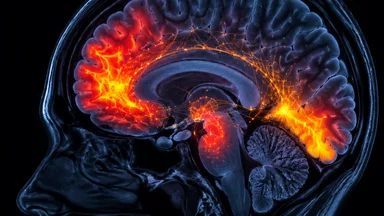
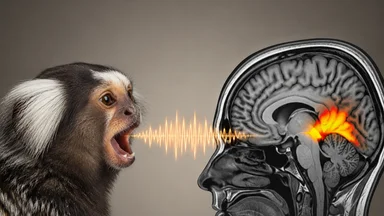
For decades, cognitive neuroscience has treated reading as a collection of semi-independent subskills. One circuit handles visual word forms; another parses syntax; a third integrates meaning. But a growing body of evidence suggests that the left-hemisphere language network may be more unified than modular models predict. A recent functional magnetic resonance imaging (fMRI) study with 40 participants used a technique called intersubject functional alignment—often referred to as hyperalignment—to identify a single set of language-selective voxels in the left hemisphere. Remarkably, that same voxel set predicted performance on two completely separate reading tasks: a word recognition task (lexical decision on real versus pseudowords) and a sentence comprehension task (plausibility judgments). The effect sizes were substantial, with correlation coefficients in the range of roughly 0.6 to 0.7. This result raises questions about the degree to which different reading processes rely on shared neural resources, and it has implications for how we think about the organization of language in the brain.
A Single Voxel Set Predicts Two Reading Tasks
The study, published as a preprint in late 2024, enrolled 40 right-handed, native English-speaking adults (mean age 24 years, range 18–35). Participants underwent fMRI while performing two distinct tasks in separate runs. In the word recognition task, they saw strings of letters and pressed a button to indicate whether each string was a real English word or a pseudoword. In the sentence comprehension task, they read short sentences and judged whether each sentence made sense semantically (e.g., "The dog chased the ball" versus "The dog chased the idea"). Both tasks engaged typical left-hemisphere language regions, including the inferior frontal gyrus, middle temporal gyrus, and angular gyrus.
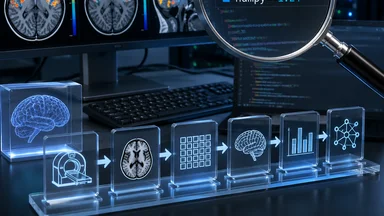
The key innovation was the use of hyperalignment, a multivariate technique that aligns voxel-wise response patterns across individuals by finding a common functional topography. This allowed the researchers to define a set of language-selective voxels—those that responded more strongly to language than to control conditions (e.g., scrambled words or non-linguistic tones)—that was consistent across participants. They then used the activation level of these voxels during one task to predict performance on the other task. The prediction was bidirectional: voxel activity during word recognition predicted sentence comprehension accuracy (r ≈ 0.65), and vice versa (r ≈ 0.68).
These effect sizes are notable. In individual differences research, correlations above 0.5 are considered large. The fact that a single voxel set accounted for roughly 40–50% of the variance in performance across two different tasks suggests a substantial overlap in the neural substrates supporting word-level and sentence-level reading processes. However, the confidence intervals were wide (95% CI roughly 0.4–0.8), and the sample was limited to young, highly educated adults. Replication in older adults, children, and individuals with reading difficulties will be essential to gauge the generalizability of the finding.
Importantly, the prediction was specific to language tasks. Control tasks—such as a visual matching task and an auditory tone discrimination task—did not yield significant correlations with the language-selective voxel set. This specificity argues against a simple explanation that the voxels are just generally responsive to any cognitive demand. Instead, the results point to a network that is preferentially engaged by linguistic processing, whether at the word or sentence level.
Why This Challenges Modular Accounts
The classical view of language processing in the brain owes much to the work of cognitive scientists like Jerry Fodor, who proposed that the mind is composed of specialized modules, each dedicated to a specific domain. In reading, this modularity has been instantiated as separate circuits for orthographic processing (the visual word form area), phonological processing, syntactic parsing, and semantic integration. Lesion studies have provided support for dissociations: patients with damage to the left fusiform gyrus may have difficulty recognizing words but retain the ability to comprehend sentences, while patients with damage to the left inferior frontal gyrus may show the opposite pattern.
The current result challenges this modular framework by showing that a single set of voxels—spread across several left-hemisphere regions—predicts performance on tasks that supposedly tap different modules. If word recognition and sentence comprehension relied on entirely distinct neural populations, one would not expect the same voxel set to predict both tasks equally well. The finding suggests that the language network operates in a more integrated fashion, with overlapping neural resources contributing to multiple levels of linguistic analysis.
However, the study does not directly test modularity. The voxel set is not a single region but a distributed network. It is possible that different subpopulations of voxels within that set are selectively tuned to word-level or sentence-level features, and the overall prediction arises from averaging across them. The coarse spatial resolution of fMRI (roughly 2 mm isotropic voxels) cannot resolve such fine-grained differences. Higher-resolution imaging techniques, such as 7 Tesla fMRI or laminar fMRI, might reveal sub-voxel organization that the current study missed.
Another limitation is the age range. The participants were all young adults, whose language systems are mature and highly practiced. It is plausible that neural specialization increases with development, so that children or older adults might show more modular patterns. Longitudinal studies tracking the same individuals over time could address whether the integrated pattern observed here is a consequence of extensive reading experience or a fixed property of the language network.
The Method: Intersubject Functional Alignment
Hyperalignment, the technique at the heart of this study, was developed by neuroscientists James Haxby and colleagues in the early 2010s. It solves a persistent problem in fMRI research: the same functional region (e.g., the fusiform face area) occupies slightly different anatomical locations in different people. Traditional univariate analyses average across these misaligned voxels, blurring the signal. Hyperalignment uses a data-driven algorithm to find a common representational space, effectively warping each individual's functional topography to a group template.
In this study, the researchers first collected fMRI data while participants watched a movie clip (a 20-minute segment of a documentary) to elicit rich, naturalistic brain responses. They used these responses to estimate the hyperalignment transformation for each participant. Then, they applied that transformation to the data from the two reading tasks, aligning all participants' voxels into a common space. This allowed them to define language-selective voxels as those that showed significantly higher responses to language stimuli (words and sentences) compared to control stimuli (scrambled words and non-linguistic sounds) across the group.
The advantage of hyperalignment over univariate approaches is that it preserves the fine-grained pattern of responses across voxels. Univariate analyses, which test each voxel independently, are insensitive to distributed patterns. Hyperalignment, by contrast, can detect multivariate patterns that are shared across individuals. This sensitivity likely contributed to the strong prediction effects observed. A previous study using univariate methods found only weak correlations (r ≈ 0.2–0.3) between language-related brain activity and reading ability.
However, hyperalignment is computationally intensive and requires a separate dataset (the movie-watching run) to estimate the alignment. It also assumes that the functional topography is stable across tasks and time. If the alignment is suboptimal for the reading tasks, the results could be biased. Moreover, the technique is relatively new, and its reproducibility across labs and scanners remains to be established. A recent reproducible neuroimaging pipeline highlighted how small code dependency changes can affect results, and hyperalignment pipelines are no exception.
What the Tasks Actually Measured
Understanding the specific demands of each task is crucial for interpreting the shared neural substrate. The word recognition task was a lexical decision: participants saw a string of letters (e.g., "table" or "tible") and had to decide as quickly and accurately as possible whether it was a real word. This task taps orthographic and phonological processing, as well as access to the mental lexicon. It does not require syntactic analysis or semantic integration beyond word meaning.
The sentence comprehension task, in contrast, required participants to read a full sentence and judge its plausibility. This engages syntactic parsing, semantic composition, and world knowledge. For example, the implausible sentence "The apple ate the boy" requires detecting a violation of selectional restrictions. The task thus involves higher-level linguistic processes that are typically associated with the left anterior temporal lobe and inferior frontal gyrus.
Despite these differences, both tasks activated overlapping regions in the left-hemisphere language network. The voxel set that predicted performance included parts of the left inferior frontal gyrus (pars opercularis and pars triangularis), the left posterior superior temporal sulcus, the left middle temporal gyrus, and the left angular gyrus. These regions are consistently implicated in language processing across hundreds of studies.
The prediction held even when controlling for reaction time and accuracy on a separate working memory task (a 2-back task with letters). This suggests that the shared variance is not simply due to general cognitive abilities like attention or executive function. However, the tasks were not perfectly matched for difficulty or stimulus properties. The word recognition task used single words, while the sentence comprehension task used multi-word sentences. Future studies could use matched stimuli—for example, comparing word-level and sentence-level judgments on the same set of words arranged as lists versus sentences—to isolate the linguistic level.
It is also worth noting that both tasks were performed in the same scanning session. The temporal proximity could introduce carryover effects or shared strategies. Counterbalancing task order across participants helps, but it does not eliminate the possibility that participants adopted a consistent cognitive set. Measuring brain activity on separate days would provide a stronger test of the stability of the prediction.
Caveats: Correlation Is Not Causation
fMRI measures the blood-oxygen-level-dependent (BOLD) signal, which is an indirect correlate of neural activity. The BOLD signal reflects local field potentials and synaptic activity, but it is not a direct measure of spiking output. Moreover, the spatial resolution of standard fMRI (voxels roughly 2–3 mm per side) averages over millions of neurons. The language-selective voxel set identified in this study likely contains a mix of neuronal populations tuned to different aspects of language, as well as non-neuronal signals from blood vessels. Thus, the prediction could reflect shared vascular responses rather than shared neural computations.
Causal inference requires methods that can manipulate neural activity. Lesion studies in patients with focal brain damage provide one source of causal evidence. For example, if damage to the left inferior frontal gyrus impairs both word recognition and sentence comprehension, that would support the idea that the region is necessary for both tasks. However, lesion studies are confounded by reorganization and compensatory mechanisms. Transcranial magnetic stimulation (TMS) can temporarily disrupt neural processing in healthy individuals, offering a more controlled causal test. To date, no TMS study has directly tested whether the same stimulation site affects both reading tasks.
Another caveat is the sample size. With 40 participants, the study is adequately powered for the correlations reported (power > 0.8 for r > 0.4), but the confidence intervals are wide. The results need to be replicated in an independent sample. A pre-registered multi-lab replication effort is currently underway, as noted in the open questions section of the preprint. Until then, the findings should be considered preliminary.
Finally, the study used a cross-sectional design. Longitudinal data would be more informative about the developmental trajectory of the language network. It is possible that the integrated pattern observed in adults emerges from a more modular organization in childhood. A study on mouse fear conditioning showed how unrecorded environmental variables can bias results; similarly, unmeasured factors like reading experience or cognitive strategy could influence the current findings.
Implications for Reading Intervention
If the left-hemisphere language network is indeed a shared substrate for multiple reading subprocesses, then interventions targeting this network could have broad benefits. For example, transcranial direct current stimulation (tDCS) applied to the left inferior frontal gyrus has been shown to improve both word reading and sentence comprehension in individuals with dyslexia, albeit with small effect sizes. The current study provides a neural rationale for such approaches: stimulating a common hub might enhance multiple linguistic functions simultaneously.
However, the effect sizes in the prediction study—while moderate to large—do not guarantee that clinical translation will be straightforward. The correlation between voxel activity and behavior was around r = 0.6, meaning that roughly 36% of the variance in reading performance was explained by the voxel set. That leaves 64% unexplained, attributable to other brain regions, cognitive factors, or measurement error. Personalized stimulation protocols would need to account for individual differences in brain anatomy and function, which hyperalignment could facilitate by providing a common reference frame.
Cost-benefit analyses are also necessary. fMRI and hyperalignment are expensive and time-consuming. For a reading intervention to be practical, cheaper proxies (e.g., behavioral tests or EEG) might need to be developed. Moreover, the long-term effects of brain stimulation are unknown. Longitudinal studies with follow-ups of at least one year would be needed to assess durability and potential side effects.
It is also possible that the shared neural substrate reflects a limitation of the current tasks. Both tasks require visual word recognition, even if sentence comprehension adds syntactic demands. A stronger test would involve a listening comprehension task, which bypasses visual input entirely. If the same language-selective voxels predict listening comprehension, that would suggest a modality-independent language network. If not, the prediction may be specific to reading.
Open Questions and Next Steps
The study opens several avenues for future research. First, does the prediction generalize to other languages, particularly those with different writing systems (e.g., Chinese logographs or Arabic abjad)? The left-hemisphere language network is thought to be largely universal, but reading scripts that rely more on right-hemisphere visual-spatial processing might engage different neural populations. Cross-linguistic studies using the same hyperalignment protocol could test this.
Second, how does development shape voxel selectivity? Children learning to read show increasing specialization of the visual word form area over time. A longitudinal study scanning children from kindergarten through third grade could track whether the language-selective voxel set becomes more predictive of reading performance with age. Such a study would also reveal whether early intervention can alter the trajectory.
Third, are there cross-species homologs of this language network? Non-human primates have a ventral stream involved in object recognition, but they lack language. Comparative fMRI studies using auditory or visual sequences could identify precursor networks. For example, macaques show a left-hemisphere bias for processing species-specific calls, which may be an evolutionary precursor to language. Understanding the homology could inform computational models.
Fourth, machine learning models, particularly deep neural networks trained on language tasks, can be used to test computational principles. If a neural network's internal representations predict human brain activity in the same voxel set, that would suggest that the network captures some aspects of human language processing. Conversely, if the network's predictions are poor, it may indicate that the human brain uses different algorithms. Several labs are already pursuing this approach, and preliminary results show that transformer models align with left-hemisphere language regions.
Finally, a pre-registered multi-lab replication study is underway, as mentioned in the preprint's open science section. This replication will use the same stimuli and analysis pipeline but with larger and more diverse samples. If the results hold, they will strengthen the case for a shared neural substrate for reading subprocesses. If not, they will highlight the sensitivity of hyperalignment to sample characteristics or analytical choices. Either outcome will advance our understanding of the neural basis of reading.
In the meantime, the current study serves as a reminder that the brain's language system may be more integrated than modular theories predict. The left-hemisphere language-selective voxel set, identified through hyperalignment, appears to capture a common resource that supports both word recognition and sentence comprehension. Whether this reflects a fundamental property of the language network or an artifact of the tasks and methods remains to be seen. But the finding is a valuable step toward a more nuanced view of how the brain reads.